
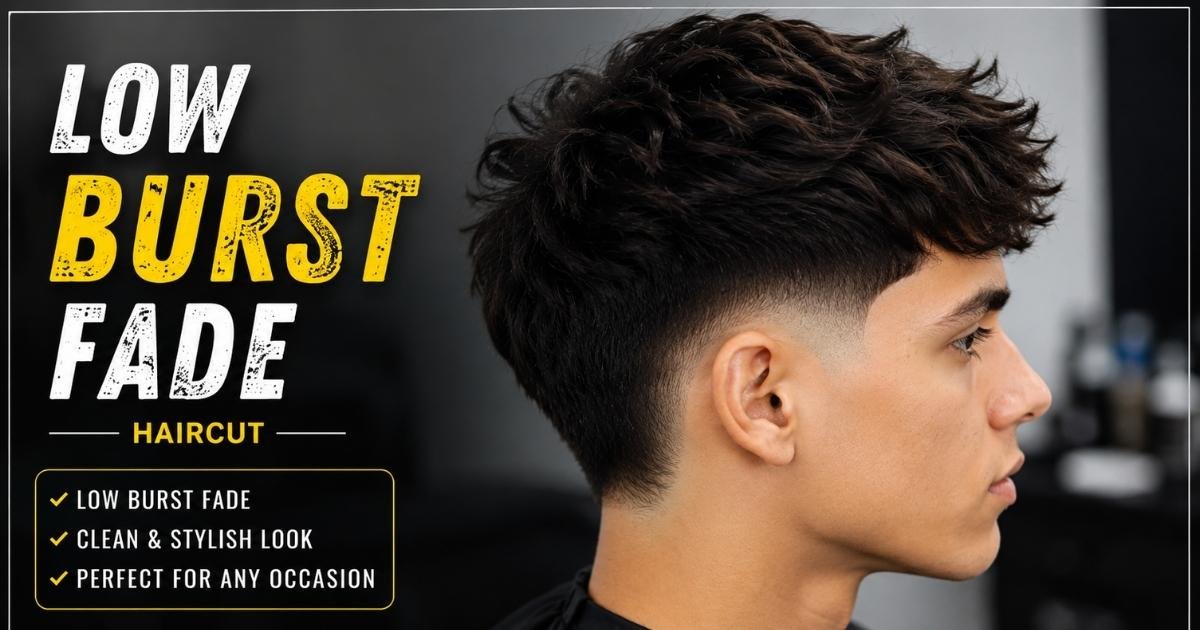
The low burst fade haircut is one of the most requested men’s cuts of 2026. It combines a rounded, blended fade near the ear with longer hair on top, giving a soft, natural finish that suits almost every hair type.
Unlike a standard fade that runs in a straight line up the side of the head, the burst fade curves around the ear like a comma. This creates a gentler transition and a more custom, tailored look.
This guide breaks down what a low burst fade actually is, how it compares to other fades, who it suits best, and 28 style variations you can bring straight to your barber. You’ll also find a simple styling routine and answers to the most common questions men ask about this cut.
Whether you have curly hair, straight hair, or a beard you want connected into the fade, there is a version of this cut built for you. Read through the full breakdown before your next barbershop visit so you know exactly what to ask for.
What Is a Low Burst Fade Haircut?
A low burst fade starts very close to the hairline, usually just above the ear and around the neckline. The fade curves in a semi circle around the ear rather than cutting straight up the side of the head.
This “burst” shape is what separates it from a regular fade. It creates a rounded blend that hugs the natural curve of the ear instead of a hard vertical line.
Because the fade begins low, more length is preserved on the sides and back. This makes it a flexible base for longer top styles like curls, waves, and mullets.
The technique requires a barber to work in a circular motion with the clippers rather than a straight vertical pass. This is why the burst fade is considered a slightly more advanced skill compared to a basic fade or taper.
Key features of a low burst fade:
- Fade starts within an inch of the hairline
- Rounded, curved blend around the ear
- More hair retained on the sides compared to mid or high fades
- Works with short, medium, or long hair on top
- Lower maintenance regrowth compared to higher fades
Low Burst Fade vs. High Burst Fade vs. Mid Burst Fade
The main difference between these three fades is where the blending begins on the head. This single detail changes the whole look of the haircut.
| Fade Type | Starting Point | Best For | Maintenance |
| Low Burst Fade | Just above the ear and neckline | Round, oval, and long face shapes | Every 3 to 4 weeks |
| Mid Burst Fade | Midway between the ear and temple | Most face shapes, balanced look | Every 2 to 3 weeks |
| High Burst Fade | Near the temple, close to the top | Square and angular face shapes | Every 2 weeks |
A low burst fade gives the most subtle, understated result of the three. It reads as a fuller, thicker haircut from a distance since less skin is exposed.
A high burst fade is bolder and shows more skin, which draws attention to the fade itself. Mid burst fade sits in between and is often chosen as a safe, balanced option for first timers.
What’s Driving the Low Burst Fade Trend in 2026?
Men are choosing lower maintenance cuts that still look sharp between barber visits. A low burst fade grows out more gracefully than a high fade, so it holds its shape for longer.
Longer top styles are back in fashion, including curls, mullets, and textured crops. These styles need a softer, lower fade to look proportionate instead of top heavy.
Barbershop content on social media has also normalized the burst shape. Barbers now showcase the rounded blend as a signature technique rather than a niche request.
A few other factors pushing the trend:
- Workplaces have relaxed grooming policies, giving men room to keep more length
- Curly and textured hair communities have embraced the burst fade for its natural blend
- Athletes and musicians have popularized the low burst with mullet combination
- Barbershops are marketing the burst fade as a signature service, which has increased demand and general awareness of the style
Search interest for the low burst fade has also climbed steadily since 2024 as men move away from ultra high, skin tight fades. The shift reflects a broader move toward natural, low effort grooming routines that still look deliberate.
Who Should Get a Low Burst Fade Haircut?
A low burst fade suits men with thick or curly hair since the rounded fade blends dense hair without leaving harsh lines. It also works well for straight and wavy hair types.
Face shape plays a role too. Round, oval, and longer face shapes benefit most because the low fade does not add extra width at the temples.
This cut also suits:
- Men who want a professional look with a subtle style detail
- First timers trying a fade who are not ready for a bold high fade
- Anyone growing out their hair who still wants tidy sides
- Men with cowlicks or awkward hairlines near the ear, since the curve disguises irregular hair growth
- Men with receding hairlines near the temple, since the low starting point draws less attention upward
This cut is less suited to men who want a dramatic, high contrast look or who prefer minimal barbershop visits. In those cases, a mid or high fade with a longer regrowth window may be a better fit.
Pros and Cons of a Low Burst Fade Haircut
Every haircut comes with trade offs, and the low burst fade is no exception.
Pros:
- Grows out slower and holds its shape longer than higher fades
- Flatters most face shapes and hair textures
- Works for formal and casual settings alike
- Pairs well with beards, curls, and longer top styles
- Requires less skin exposure, which suits men self conscious about scalp visibility
Cons:
- The curved shape takes more skill, so an inexperienced barber may struggle with it
- Less dramatic than a high fade if you want a bold statement look
- Regrowth can blur the burst shape faster on very fast growing hair
- Not ideal if you specifically want maximum contrast between skin and hair
28 Low Burst Fade Haircut Ideas for Men
Each of these styles uses the same low burst foundation but changes the top length, texture, or added details. Bring a photo of your favorite to your barber for the best result.
Classic Low Burst Fade

This is the standard version with clean sides and a natural length on top, usually two to three inches. It works for nearly any occasion and is the easiest style to request by name.
Low Burst Fade Mullet
The sides stay short with the low burst blend while the back is left long. This combination has become one of the most searched fade styles in 2026 thanks to its retro edge.
Curly Low Burst Fade
Natural curls sit on top while the low burst fade cleans up the sides without disturbing curl pattern. A curl defining cream keeps the top looking fresh between wash days.
Straight Hair Low Burst Fade
Straight hair on top is left slightly longer, around two inches, then combed forward or to the side. The low fade keeps the sides neat without competing with the sleek top.
Textured Low Burst Fade

A textured crop on top adds movement and volume through choppy, layered cutting. This pairs especially well with a matte styling paste for a lived-in finish.
Short Low Burst Fade
Top hair is kept under an inch for a tighter, low maintenance version of the cut. This is a strong choice for first time fade wearers or hot climates.
Low Burst Fade with Beard
The rounded fade continues into a tapered beard line for a fully connected look. This combination is popular because it frames the jaw and softens the transition between hair and facial hair.
Messy Low Burst Fade
Top hair is styled with a light matte product and finger combed for a deliberately undone look. The burst fade keeps the sides sharp so the messy top still looks intentional.
Low Burst Fade Mohawk

A strip of longer hair runs down the center while both sides taper into a low burst blend. This is a bolder option that still keeps a clean, professional edge near the ears.
Low Burst Fade with Design
A shaved line or pattern is added within the fade itself, usually near the temple. Simple geometric lines work best since intricate designs can clash with the burst’s rounded shape.
Buzz Cut Low Burst Fade
Top hair is buzzed to a uniform short length, typically a number 2 or 3 guard, then blended into the low burst. This is the lowest maintenance option on this list and suits nearly every face shape.
Low Burst Fade Pompadour
Longer top hair is swept upward and back with volume at the front, then blended into the low fade. A strong hold pomade is essential to keep the pompadour standing through the day.
Comb Over Low Burst Fade

A defined side part separates longer top hair, which is combed across and slightly over the fade. This classic combination works well for office settings and formal events.
Wavy Hair Low Burst Fade
Natural waves are left at a medium length on top and defined with a light sea salt spray. The low burst keeps the sides tidy without flattening the wave pattern.
Asian Low Burst Fade
This style typically pairs thick, straight top hair with a low burst fade and a soft fringe. It is popular because it manages hair density without adding bulk near the ears.
Low Burst Fade for Black Men
This version blends coily or kinky hair textures with the low burst, often finished with a curl sponge or twist out on top. The rounded blend works especially well with dense hair since it avoids harsh, visible lines.
Slick Back Low Burst Fade

Top hair is grown to at least three inches and slicked straight back with a strong hold gel. The low fade keeps the look grounded and prevents the style from appearing too formal.
Low Burst Fade Fringe
A soft fringe falls forward over the forehead while the sides taper into the low burst blend. This style has surged in popularity for its youthful, effortless appearance.
Spiky Hair Low Burst Fade
Short to medium top hair is styled upward into defined spikes using a matte wax or clay. The low burst keeps the base clean so the spikes remain the focal point.
Undercut Low Burst Fade
This combines a disconnected undercut on the upper sides with a low burst blend closer to the ear. The result is more contrast up top while keeping the ear area soft.
Long Hair Low Burst Fade

Top hair is grown past four inches, often styled into a loose quiff or pushed back naturally. The low burst fade balances the extra length so the cut does not look unkempt.
Tapered Low Burst Fade
This is a gentler version of the burst, with a slower gradient from long to short. It suits men who want a subtle fade rather than a high contrast blend.
Low Burst Fade Faux Hawk
Top hair is styled upward through the center, mimicking a mohawk without shaving the sides completely. The low burst fade provides a soft base that keeps the look wearable for daily settings.
Low Burst Fade with Line Up
A sharp, straight edge is cut along the hairline and temples while the sides fade low around the ear. This combination is common in barbershops that specialize in precision edging.
Skin Low Burst Fade

Also called a bald fade, this version fades all the way down to the skin at the lowest point near the ear. It offers the highest contrast version of the low burst while still keeping the curved, rounded shape.
How to Style a Low Burst Fade Haircut
Styling a low burst fade is straightforward once you know the right order of steps. Follow this routine for a clean result every time.
The exact products and tools you need will depend on your top length and hair texture, but the five step sequence below applies to nearly every version of this cut.
Start with Clean Hair
Wash hair with a lightweight shampoo to remove oil and product buildup before styling. Dry hair about 80 percent with a towel or blow dryer before applying anything.
Apply the Right Product
Choose a product based on your top length and desired finish. Pomade and gel work for slicked styles, while clay and matte paste suit textured or messy looks.
Shape Your Hair
Use a comb or your fingers to direct hair into the desired shape, whether that is forward, back, or upward. Work from the roots first, then refine the ends for a natural finish.
Add Volume if Needed
For styles like the pompadour or faux hawk, use a round brush and blow dryer on a low heat setting to lift the roots. Direct airflow against the direction you want the hair to fall for lasting lift.
Finish and Hold
Apply a small amount of hairspray or a light hold product to lock the style in place. Avoid overloading with product near the low fade line, since buildup there can make the blend look greasy or uneven.
Low Burst Fade Haircut vs. Taper Fade
These two cuts are often confused, but they differ in both shape and finish. Understanding the difference helps you communicate clearly with your barber.
| Feature | Low Burst Fade | Taper Fade |
| Blend shape | Curved, rounded around the ear | Straight, follows the hairline down |
| Fade intensity | Can range from subtle to skin | Generally more gradual, less skin shown |
| Best hair types | Thick, curly, or textured hair | Straight and fine hair |
| Maintenance | Every 3 to 4 weeks | Every 4 to 6 weeks |
| Overall look | Modern, sharper contrast near the ear | Classic, understated, business friendly |
A taper fade keeps length longer at the nape and sides with minimal skin exposure, making it the more conservative choice. A low burst fade offers a sharper, more contemporary look while still staying low maintenance compared to higher fades.
If you want a cut that reads as classic and safe for any workplace, a taper fade is the reliable option. If you want a modern edge without going too bold, the low burst fade is the better pick.
Some men choose to alternate between the two depending on the season or occasion, since both cuts share a similar low maintenance foundation. Ask your barber to keep notes on the guard sizes used so you can switch between styles without starting from scratch each time.
Conclusion
The low burst fade haircut earns its popularity in 2026 by striking a balance between low maintenance and modern style. Its rounded blend flatters nearly every face shape and hair type, from tight curls to straight, fine hair.
With 28 variations to choose from, there is a version of this cut for formal offices, casual weekends, and everything in between. Bring a reference photo to your barber and mention the starting point near your ear so they nail the burst shape on the first try.
Whether you pick a classic fade, a mullet combination, or a bold skin fade, the low burst technique keeps the cut sharp between visits. It remains one of the most reliable, flattering choices a man can walk into a barbershop and ask for.
FAQs
What makes a burst fade different from a regular fade?
A burst fade curves around the ear in a rounded shape instead of running in a straight line. This creates a softer, more blended transition on the sides.
How often do I need to get a low burst fade touched up?
Most men need a touch up every 3 to 4 weeks to keep the blend sharp. Faster hair growth may require visits closer to every 2 to 3 weeks.
Does a low burst fade work with curly hair?
Yes, curly hair blends especially well with a low burst fade since the rounded shape avoids harsh lines. It is one of the most requested combinations for textured hair in 2026.
Is a low burst fade good for beginners trying their first fade?
Yes, it is one of the most beginner friendly fades since it shows less skin than a high or mid fade. The subtle blend makes the transition from a regular haircut easier.
Can I add a beard to a low burst fade?
Yes, the low burst fade pairs naturally with a tapered beard since both use a similar blending technique. Ask your barber to connect the fade line into the beard for a seamless look.