
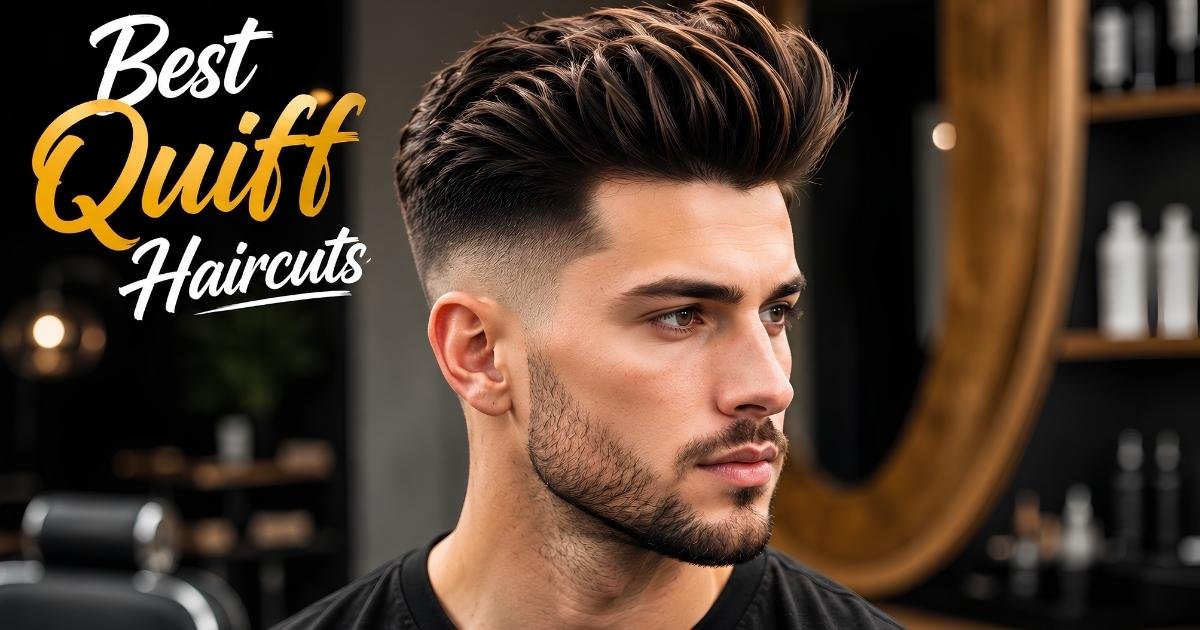
The quiff haircut remains one of the most requested men’s hairstyles in 2026, blending vintage rockabilly attitude with modern barbering precision. This iconic look has grown far beyond a single style, now spanning skin fades, textured crops, curly variations, and boardroom-ready cuts.
Whether you have thick, thin, straight, or curly hair, there is a quiff variation built for your texture, face shape, and lifestyle. This guide breaks down the most popular quiff styles trending this year, explains how to ask your barber for the exact look you want, and walks through a step-by-step styling routine you can follow at home.
You will also find common mistakes that ruin a quiff, along with quick answers to the questions men search for most. By the end, you should be able to walk into any barbershop and describe exactly what you want with confidence.
What Is a Quiff Haircut?
A quiff haircut features hair swept upward and slightly back from the forehead, creating height and volume at the front while the sides stay shorter. Unlike a pompadour, a quiff sits lower and looks more relaxed, making it easier to maintain for everyday wear.
The Origin of the Quiff Hairstyle
The quiff traces back to 1950s rockabilly culture, popularized by icons such as Elvis Presley, who styled their front hair into a raised, forward-swept wave.
Punk and rock movements in the 1970s and 1980s reshaped the quiff into a spikier, more rebellious statement.
Today’s version blends that vintage energy with modern fades and textured finishes, making it a wardrobe staple for 2026.
Key Features of a Quiff Haircut
- Volume and height concentrated at the front hairline
- Shorter, tapered, or faded sides and back
- Hair brushed upward and slightly backward
- Works on short, medium, and long lengths
- Adapts easily to straight, wavy, or curly textures
Why Men Love Quiff Haircuts
- Versatile enough for formal offices and casual weekends
- Easier daily styling compared to a full pompadour
- Flatters most face shapes when sides are tailored correctly
- Timeless look that still feels current in 2026
- Pairs well with fades, beards, and hard parts
Who Should Get a Quiff Haircut?
Men with medium to thick hair get the most natural lift, though fine hair can still achieve a quiff using volumizing products and the right blow dry technique.
The style suits oval, square, and diamond face shapes especially well, and barbers can adjust fringe height to balance rounder or longer faces.
It also works for both professional settings and casual everyday looks, making it a practical choice for most men. Even first-time clients who have never worn a fade before can ease into the style through a soft taper before trying a bolder skin fade later on.
Top 27 Quiff Haircut Styles for Men in 2026
From subtle, boardroom-friendly cuts to bold fades and curly textures, these quiff variations cover a wide range of hair types, lengths, and occasions. Each style below includes what makes it unique and who it suits best.
Classic Quiff Haircut

The classic quiff keeps hair medium length on top with a natural, brushed-up lift at the front and slightly shorter sides. It suits men who want a traditional look without heavy fades, using a light pomade for a soft, natural shine.
Modern Quiff Haircut

The modern quiff pairs a textured top with a tight fade or disconnected sides for a sharper, more editorial finish. It suits men who want a fresh take on the vintage silhouette for 2026.
Textured Quiff Haircut

This style uses choppy, layered cutting techniques to add movement and separation through the top section. A matte clay or paste highlights the texture without adding unwanted shine.
Messy Quiff Haircut

The messy quiff embraces a relaxed, undone finish with pieces pointing in different directions. It suits casual settings and needs minimal precision during styling, which makes mornings faster.
Short Quiff Haircut

A short quiff keeps the top length between one and two inches, creating subtle height without a dramatic peak. It is low maintenance and ideal for men who prefer a tidy, professional appearance.
Long Quiff Haircut

The long quiff allows three inches or more on top, giving room for dramatic height and sweeping shapes. It needs stronger hold products and more frequent blow drying to keep its structure.
Taper Fade Quiff

A taper fade gradually shortens the hair down the sides and back without going to bare skin. This softer fade suits conservative workplaces while still framing the quiff cleanly.
Low Fade Quiff

The low fade starts just above the ears, keeping most of the length intact for a subtle transition. It is a safe, versatile choice for men easing into fade styles.
Mid Fade Quiff

A mid fade begins around the temple area, creating a balanced contrast between the faded sides and the voluminous top. It works well with most hair densities and face shapes.
High Fade Quiff

The high fade starts near the top of the head, producing a bold, dramatic contrast against the quiff’s height. This combination suits men who want a striking, modern silhouette.
Skin Fade Quiff

A skin fade blends the sides down to bare skin for maximum contrast against the textured top. It is one of the most requested combinations in 2026 barbershops for a sharp, clean look.
Burst Fade Quiff

The burst fade curves around the ear rather than running in a straight line, creating a unique, rounded fade shape. It pairs especially well with quiffs that have longer back sections.
Undercut Quiff

An undercut quiff uses a hard, disconnected shave on the sides while leaving significant length on top. The stark contrast makes the quiff’s volume and shape the clear focal point.
Side Part Quiff

This variation adds a defined part on one side before sweeping the remaining hair upward and back. It creates a slightly more formal, polished appearance suited to office environments.
Curly Quiff Haircut

Curly quiffs use the natural curl pattern to build height without heavy blow drying, relying instead on curl-defining cream. The result is a textured, voluminous top with faded or trimmed sides.
Wavy Quiff Haircut

Wavy hair adds natural movement to the quiff shape, reducing the need for excessive product. A light sea salt spray enhances the wave pattern while keeping the front lifted.
Thick Hair Quiff

Men with thick, dense hair achieve the most dramatic height with minimal effort, since the hair naturally holds its shape longer. Barbers often thin out bulk to prevent the quiff from looking too heavy.
Pompadour Quiff

This hybrid style borrows the pompadour’s height and volume while keeping the quiff’s more relaxed forward sweep. It suits special occasions or men who want extra drama in their everyday look.
Beard with Quiff Haircut

Pairing a full or stubble beard with a quiff balances facial hair volume with hair volume for a cohesive, masculine look. Regular beard trimming keeps proportions sharp alongside the haircut.
Disconnected Quiff

A disconnected quiff creates a clear, deliberate break between the long top and closely shaved sides, with no gradual blend. It is a bold statement cut favored by younger, trend-focused men.
Quiff with Hard Part

A hard part is a shaved line separating the top section from the sides, adding definition and structure. It works especially well with side part or slicked quiff variations.
Brushed Up Quiff

This style focuses purely on brushing hair straight upward from the roots rather than sweeping it backward. It creates maximum height and suits men with naturally cooperative, straight hair.
Professional Business Quiff

Designed for corporate settings, this quiff keeps height moderate and sides neatly tapered rather than dramatically faded. A light hold product keeps it polished through long workdays.
Quiff Mohawk Fade

This edgier take narrows the top section into a mohawk-like strip while fading the sides tightly. It suits confident men who want a bold, statement-making silhouette in 2026.
Trendy Quiff Haircut

Combining elements like skin fades, textured crops, and matte finishes, this catch-all style reflects whatever barbershops are trending this season. It is ideal for men who like to update their look regularly.
Quick Reference Table
| Style | Best For | Maintenance Level |
| Classic Quiff | Traditional, everyday looks | Low |
| Textured Quiff | Straight or wavy hair | Medium |
| Skin Fade Quiff | Bold, modern contrast | Medium |
| Curly Quiff | Naturally curly hair | Low |
| Long Quiff | Men who enjoy styling time | High |
| Professional Business Quiff | Office and corporate settings | Low |
| Undercut Quiff | Statement, high-contrast looks | Medium |
| Pompadour Quiff | Special occasions | High |
| Messy Quiff | Casual, low-effort mornings | Low |
| Quiff Mohawk Fade | Bold, trend-focused styling | Medium |
How to Ask Your Barber for a Quiff Haircut
Communicating clearly with your barber makes the difference between a quiff that suits you and one that falls flat. Use these four points to guide the conversation before the clippers come out.
Choose Your Preferred Quiff Length
Decide whether you want a short, low maintenance quiff or a longer, dramatic version before your appointment. Giving a specific length in inches or centimeters helps your barber cut more accurately.
Discuss Texture and Volume
Let your barber know if you want a sleek, brushed finish or a messy, textured top. This affects how they layer and thin the hair during the cut.
Show Reference Photos
Photos remove guesswork and help bridge any gap between how you describe a style and how your barber interprets it. Save two or three images that show the length, fade, and finish you want.
Mention Your Styling Routine
Tell your barber how much time you spend styling each morning, since this affects how they cut and layer your hair. A low maintenance routine calls for a different cut than one built around heavy blow drying.
How to Style a Quiff Haircut (Step-by-Step Tutorial)
Follow these six steps each morning to get a salon-quality quiff without spending too much time in front of the mirror.
Step 1: Wash and Towel Dry Your Hair
Start with clean, damp hair, since product holds better on freshly washed strands than on oily or product-heavy hair. Towel dry until hair is damp, not dripping wet.
Step 2: Apply a Pre-Styling Product
Work a small amount of volumizing mousse or sea salt spray through damp hair from roots to tips. This creates a base texture that helps the quiff hold its shape longer.
Step 3: Blow Dry for Maximum Volume
Use a round brush to lift the front section straight up while blow drying on medium heat. Direct airflow underneath the roots to build lasting height before it cools, and hold each section in place for a few seconds as it dries so the shape sets properly.
Step 4: Create the Quiff Shape
Once dry, comb the front section upward and slightly back to form the signature quiff peak. Use your fingers or a comb to shape the sides into the desired fade or taper line.
Step 5: Apply Styling Product
Apply pomade, clay, or wax depending on the finish you want, matte for texture or shine for a sleeker look. Warm the product between your palms first so it distributes evenly.
Step 6: Lock the Style in Place
Finish with a light spray of flexible hold hairspray to keep the quiff standing through the day. Avoid touching it too much afterward, since excess handling flattens the shape.
Common Quiff Haircut Mistakes to Avoid
Even a great haircut can look messy with the wrong styling habits. Watch out for these common errors.
Using Too Much Product
Overloading hair with pomade or wax weighs it down, causing the quiff to collapse instead of stand tall. Start with a small amount and add more only if needed.
Skipping Blow Drying
Air drying alone rarely gives enough lift for a proper quiff shape, especially on fine or straight hair. A few minutes of directional blow drying makes a noticeable difference.
Choosing the Wrong Hair Length
A quiff that is too short struggles to hold height, while one that is too long can look heavy without regular trims. Discuss realistic length options with your barber based on your hair density, since thicker hair can usually support more length than fine hair.
Ignoring Face Shape
A quiff cut without considering face shape can exaggerate a round face or overwhelm a smaller one. Barbers can adjust fringe height and fade placement to create better facial balance.
Conclusion
The quiff haircut continues to prove why it is a timeless choice for men in 2026, offering countless variations across fades, textures, and lengths. Whether you prefer a low maintenance classic cut or a bold skin fade quiff, there is a version suited to your hair type and lifestyle.
Take your preferred style photo to your barber, follow the styling steps outlined above, and avoid the common mistakes that flatten a quiff’s shape. With the right cut and a consistent routine, this classic style will keep you looking sharp all year.
Start with one variation that matches your current hair length and lifestyle, then experiment with fades, textures, or a beard pairing once you know what works for your face shape. A well-maintained quiff is one of the easiest ways to look put together with very little daily effort.
FAQs
How long does hair need to be for a quiff?
Hair on top should be at least two to three inches long to create enough height for a proper quiff. Shorter lengths can still work with strong hold products, though the lift will be subtle.
Does a quiff suit thin hair?
Yes, thin hair can achieve a quiff using volumizing mousse and directional blow drying to build a fuller base. Regular trims also help prevent thin hair from looking flat.
How often should I get a quiff trimmed?
Most quiffs need a trim every three to four weeks to keep the fade sharp and the top shape controlled. Longer quiff versions can stretch to five or six weeks between cuts.
What product works best for a quiff?
Matte clay or paste suits textured, natural looking quiffs, while pomade gives a sleeker, shinier finish. Choose based on the texture and shine level you prefer.
Can I get a quiff with curly hair?
Yes, curly hair naturally adds volume and texture that works well with a quiff shape. Curl cream helps define the top while faded sides keep the style balanced.
Is a quiff good for a receding hairline?
A quiff can help disguise a receding hairline when the barber styles the fringe strategically over thinning areas. Shorter, textured versions often work better than long, swept-back styles in this case.
What is the difference between a quiff and a pompadour?
A quiff sits lower with a more relaxed forward sweep, while a pompadour has more height and a fuller backward sweep. Quiffs are generally easier to maintain day to day.