
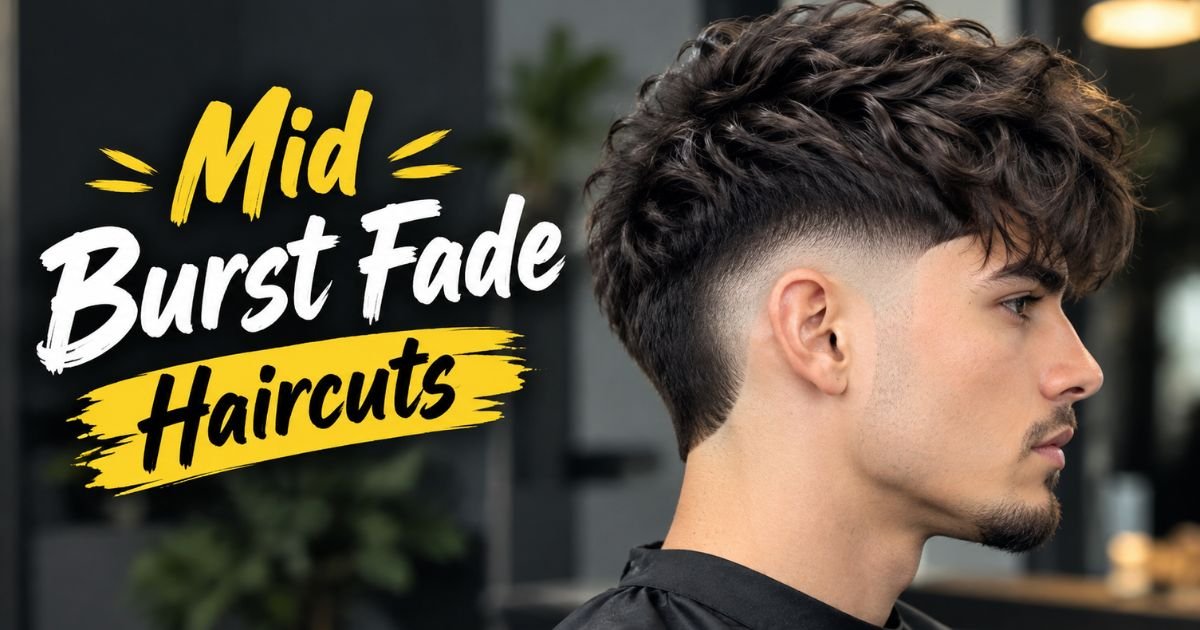
The mid burst fade is one of the most requested haircuts in barbershops today. It blends a rounded fade around the ear with clean length on top, giving a sharp yet natural look.
This guide covers what a mid burst fade is, why it works in 2026, and 15 style variations to try. You will also learn how to ask your barber for one and how to maintain it at home.
Whether you have straight, curly, or thick hair, there is a mid burst fade version that fits your texture and lifestyle.
This cut has become a barbershop staple because it adapts to almost any lifestyle. It looks sharp for work, holds up well through workouts, and still leaves room for creative styling on weekends.
What Is a Mid Burst Fade Haircut?
A mid burst fade is a fade that starts at the middle of the head and curves around the ear in a semicircle. Unlike a low fade or high fade, it does not run in a straight line down the sideburn.
The “burst” part means the fade fans out around the ear instead of following a straight path toward the neckline. The “mid” part refers to where this fade begins, roughly at ear level.
This combination creates a rounded, sculpted shape. It pairs well with short sides and longer hair on top, making it a flexible base for many styles.
Key features:
- Fade starts around the middle of the head
- Curves around the ear instead of running straight down
- Leaves a bit more length in the back for a natural taper
- Works with nearly any top length or hair texture
Most barbers use clippers to build the burst shape freehand, then blend it into the rest of the head using a comb over technique. This freehand approach is why skill level matters more here than with a straight line fade.
Why the Mid Burst Fade Is Still Popular in 2026
Barbers report that burst fades remain a top request because they suit round, oval, and square face shapes equally well. The rounded fade line softens harsh angles and adds definition without looking too severe.
Reasons for its lasting popularity:
- It works with short crops, curly tops, and longer styles alike
- The back stays slightly longer, avoiding a flat or boxy look
- It grows out more evenly than a high skin fade
- It suits professional settings as well as casual, everyday wear
- It photographs well from multiple angles, which matters for social media and profile photos
In 2026, barbers are also pairing mid burst fades with natural texture instead of heavy gel, which gives a more relaxed, low effort finish. This fits the wider shift toward simpler, low maintenance grooming routines.
Search interest in fade styles has also shifted toward personalization. Instead of asking for one standard fade, more clients now request a specific burst height, contrast level, and top texture, which is part of why this style keeps evolving each year rather than fading out.
Who Should Try a Mid Burst Fade Haircut?
The mid burst fade suits most face shapes and hair types, but it is especially flattering for certain features and lifestyles.
Good candidates include:
- Men with round or oval faces, since the curved fade adds structure
- People with thick or wavy hair, which holds the burst shape well
- Anyone who wants a style that works for both work and casual settings
- First timers trying a fade, since it is more forgiving than a full skin fade
It can need extra attention for very fine or thin hair, since the fade edge may grow out unevenly. A skilled barber can adjust the burst height to better suit finer hair types.
It is also a solid pick for anyone switching from a long, undefined haircut to something more structured. Since the fade sits at mid level rather than high on the head, it feels like a gentler first step into shorter, more defined grooming.
Mid Burst Fade Styles for a Fresh New Look
Below are 15 mid burst fade variations, ranging from classic to modern. Each one works a little differently depending on hair type, length, and personal style.
Mid Burst Fade Slick Back
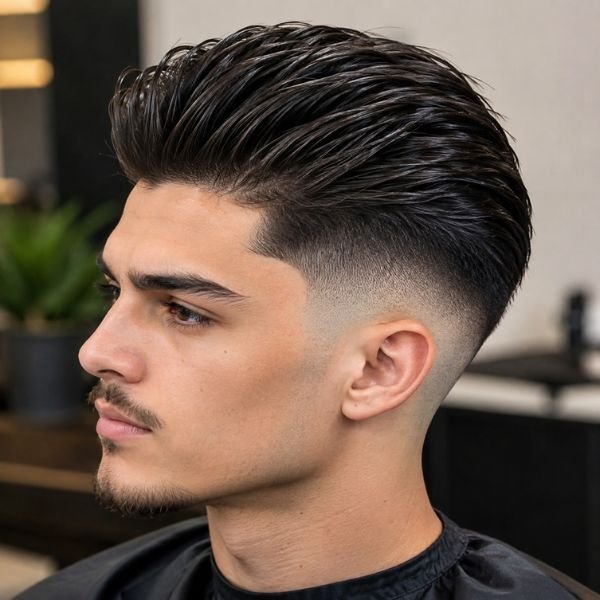
The top hair is swept straight back with a light pomade or gel, while the burst fade keeps the sides clean and rounded. This works well for medium to long hair and gives a polished, professional finish. It suits straight or wavy hair best.
Curly Mid Burst Fade
This version keeps natural curls on top while the fade tapers around the ear. It highlights curl pattern and volume instead of hiding it, and works best for medium density curls.
Mid Burst Fade with Design
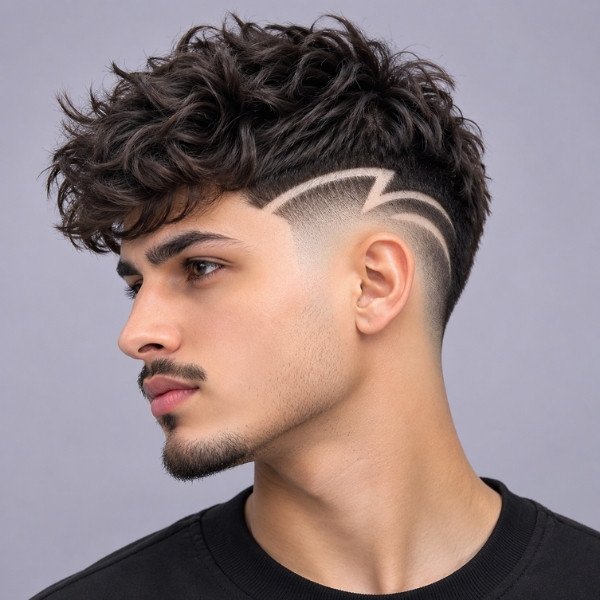
A shaved line, geometric shape, or pattern is added into the fade for a bold, personalized touch. Designs stay visible longer on shorter fades and need touch ups roughly every one to two weeks. This option works best for people who already get regular trims, since the pattern loses sharpness quickly as hair grows.
Classic Mid Burst Fade
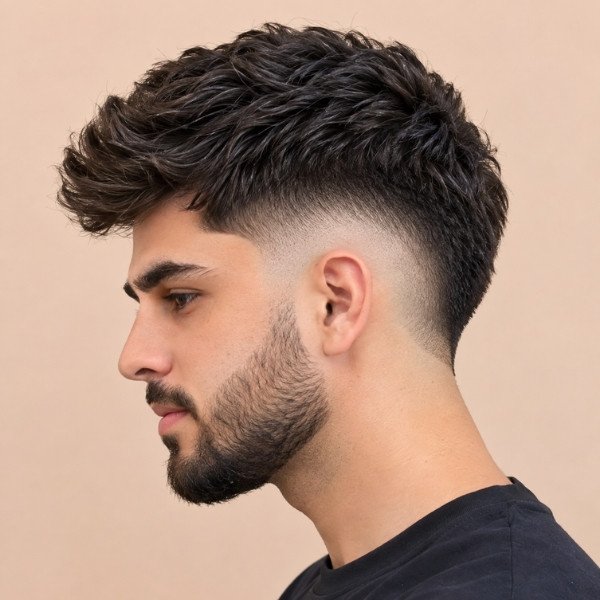
This is the simplest version, with a clean fade and natural top length and no added texture or design. It is a timeless, low risk choice that pairs with almost any hairstyle on top.
Mid Burst Fade Crop Top
The top hair is cut short and textured into a fringe, often pushed forward. Combined with a burst fade, it creates a youthful, low maintenance shape suited to straight or slightly wavy hair.
Wavy Mid Burst Fade
Natural waves are left longer on top while the fade curves cleanly around the ear. A light sea salt spray can enhance wave texture without heavy product buildup.
Mid Burst Fade Pompadour
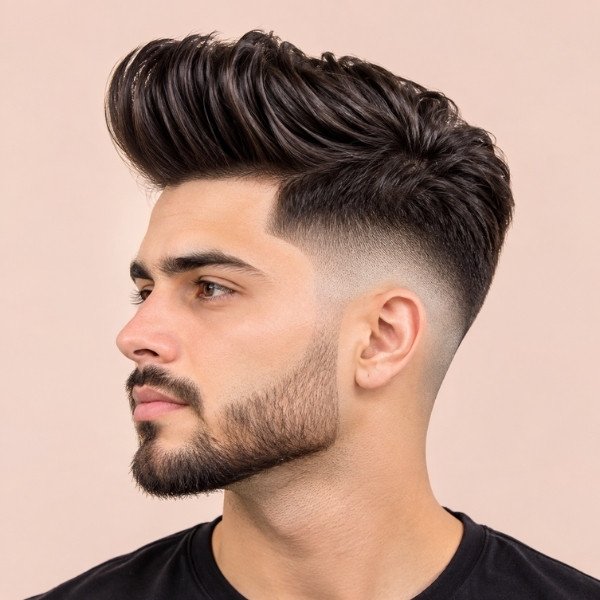
Height and volume are built at the front and swept back, while the burst fade trims the sides. This suits thicker hair that can hold volume through the day. A blow dry with a round brush before applying product helps the front section hold its lift longer.
Modern Mid Burst Fade
This variation mixes a slightly higher burst point with textured, choppy top hair for a fresher, edgier finish. It works best on straight to wavy hair of medium length.
Mid Burst Fade Mohawk
The center strip of hair is left longer and styled upward, while the burst fade tapers the sides sharply. This bold combination suits shorter overall hair lengths.
Textured Mid Burst Fade
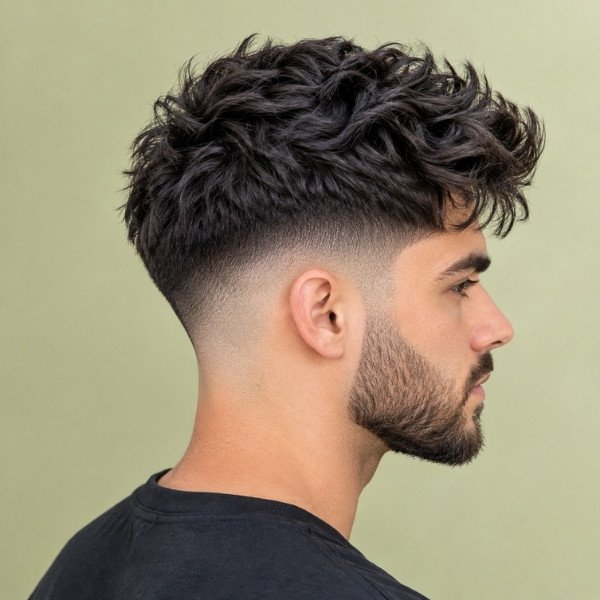
A matte styling product creates separated, piecey texture on top, while the fade stays smooth and rounded underneath. This look works for most hair types and adds visual interest without extra length.
Mid Burst Fade for Thick Hair
Thick hair holds the burst shape especially well due to its natural weight and volume. Barbers often thin the top slightly to prevent bulkiness while keeping the fade defined.
Mid Burst Fade Fringe
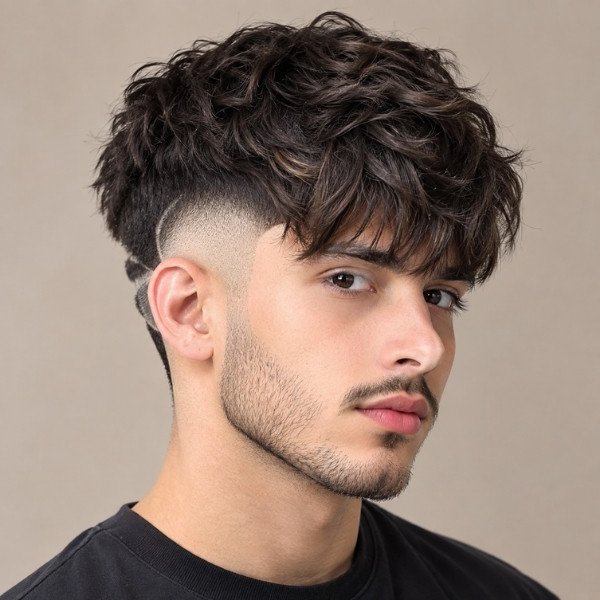
A soft fringe rests just above the eyebrows at the front, while the burst fade shapes the sides. This works well for straight or lightly wavy hair types.
Mid Burst Fade Mullet
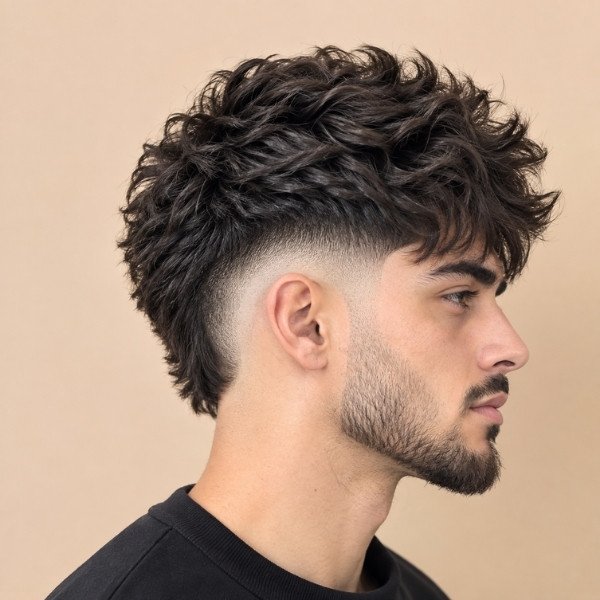
Length is kept longer at the back while the sides get the burst fade treatment. This retro inspired combination has grown popular again in 2026 for its bold, statement look. It suits people who want noticeable contrast between the short fade and the longer back section.
Mid Burst Fade Comb Over
The top hair is combed to one side with a defined part, while the fade curves around the ear beneath it. It offers a neat, business appropriate finish.
Mid Burst Fade with Beard
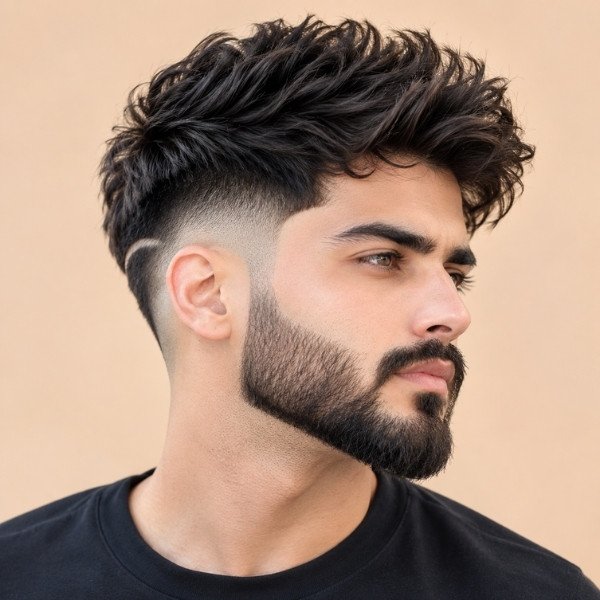
Pairing the fade with a well groomed beard creates a balanced, full look. The fade should blend smoothly into the beard line, which usually calls for a skilled barber. Regular beard trims at the same interval as fade touch ups keep both areas looking consistent.
Low Maintenance Mid Burst Fade
For those who do not want frequent barber visits, a slightly softer fade with more length left on top grows out more evenly. This reduces how often you need touch ups.
Tips for a low maintenance version:
- Ask for a higher burst point so regrowth is less noticeable
- Keep more length on top to help blend new growth naturally
- Choose a classic or textured style rather than a sharp design
- Book touch ups every three to four weeks instead of two
These small adjustments do not change the overall look of the haircut, but they make a real difference in how often you need to sit in the barber chair.
How to Ask Your Barber for a Mid Burst Fade Haircut
Getting the exact look you want starts with clear communication. Follow these steps to avoid miscommunication in the chair.
Step 1: Say “Mid Burst Fade” and Point to Where You Want It to Start
Use the specific term rather than just saying “fade.” Point to where you want the burst to begin, usually just above or around the ear, so your barber has a clear starting point.
Step 2: Describe the Top Length You Want
Tell your barber how much length to leave on top, whether short and textured or longer for styling. Giving a rough measurement, such as one to two inches, helps set clear expectations.
Step 3: Mention Your Hair Texture
Straight, wavy, curly, and coily hair all fade differently. Let your barber know your natural texture so they can adjust their technique for a smoother blend.
Step 4: Decide on Fade Contrast
Choose between a low contrast fade, which blends gradually, or a high contrast fade, which creates a sharper visual line. High contrast fades show growth faster and need more frequent trims, while low contrast fades are a better fit for a laid back, everyday look.
Step 5: Bring a Reference Photo
A photo removes guesswork and gives your barber a clear visual target. Pick one that closely matches your hair type and length for the most accurate result, since a style shown on different hair can lead to a slightly different outcome on yours.
Step 6: Ask What Maintenance Looks Like for Your Hair
Every hair type grows at a different rate. Ask your barber how often you will realistically need touch ups based on your growth speed and the style you chose, and whether any home products can help extend time between visits.
How to Maintain a Mid Burst Fade Haircut
Proper care keeps the fade looking sharp between barber visits and supports healthy hair and scalp overall. A short daily routine goes a long way toward extending the life of the cut.
Daily Hair Care Tips
- Wash with a gentle, sulfate free shampoo two to three times a week
- Avoid over washing, which can dry out the scalp and fade line
- Pat hair dry instead of rubbing to reduce frizz and breakage
- Apply a lightweight moisturizer or oil to keep the scalp healthy
- Trim stray neck and edge hairs between visits with clippers if comfortable doing so
- Sleep on a clean pillowcase to reduce buildup and irritation around the fade line
Best Styling Routine
- Use a small amount of pomade, clay, or cream depending on desired hold
- Style hair while slightly damp for easier control
- Brush or comb the fade area gently to keep it looking clean
- Time your touch ups based on how fast your hair grows
| Hair Growth Speed | Recommended Touch Up Frequency |
| Fast growth | Every 2 weeks |
| Average growth | Every 3 weeks |
| Slow growth | Every 4 to 5 weeks |
Conclusion
The mid burst fade remains one of the most adaptable haircuts of 2026, working across hair textures, face shapes, and personal styles. From the classic version to bolder mohawk or mullet takes, there is a variation for nearly every preference.
Bring a clear reference photo, communicate your hair texture, and discuss maintenance upfront to get a cut that lasts. With the right upkeep routine, this style stays sharp and easy to manage between visits.
If you want a haircut that balances a clean, defined fade with natural styling flexibility, the mid burst fade is a reliable choice for 2026 and beyond. It adapts as your hair grows, works with your natural texture, and gives you room to switch between subtle and bold looks without starting over.
FAQs
What makes a burst fade different from a regular fade?
A burst fade curves around the ear in a half circle instead of running in a straight line down the sideburn. This creates a more rounded, sculpted appearance overall.
How often should I get a mid burst fade touched up?
Most people need a touch up every two to four weeks depending on hair growth speed. Faster growing hair usually needs more frequent visits.
Does a mid burst fade work for curly hair?
Yes, curly hair holds the burst shape well and adds natural texture to the style. Barbers often adjust the fade height slightly to suit the curl pattern.
Is a mid burst fade good for a professional workplace?
Yes, classic and comb over variations look polished and suit most office settings. Bolder designs or mohawk versions work better in casual environments.
Can I grow out a mid burst fade easily?
Yes, it grows out more evenly than a high skin fade because it starts lower on the head. This makes it a practical choice for anyone who cannot always keep up with tight touch up schedules.
What hair length works best on top for a mid burst fade?
Both short and longer top lengths work well, depending on the chosen style. Slick backs and pompadours need more length, while crops and textured looks stay shorter.
How do I know if a mid burst fade suits my face shape?
It generally flatters round, oval, and square face shapes by adding definition around the jaw and ear. A barber can adjust the burst height to match your specific features.