
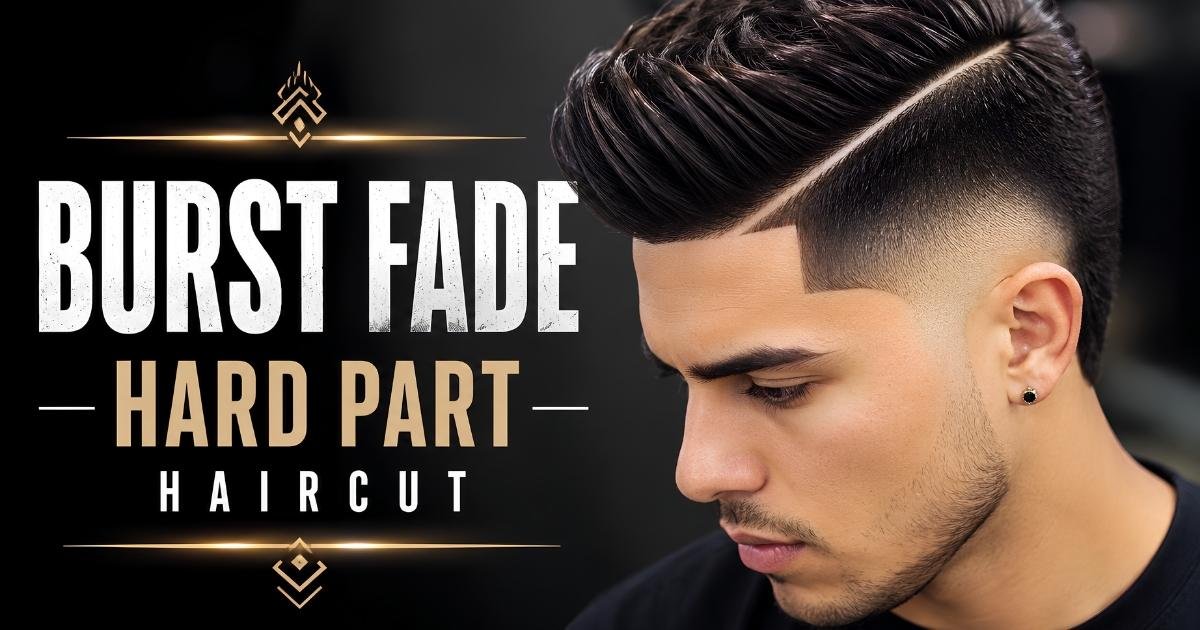
The burst fade hard part haircut is one of the sharpest men’s styles trending in 2026. It blends a rounded fade that curves around the ear with a crisp, shaved line that defines the part.
This guide breaks down what makes the cut work, shares 24 stylish variations for every hair type, and walks you through a step by step tutorial. You will also find quick answers to the questions men ask most before booking their next barber appointment.
Whether you have straight hair, thick curls, or a wavy texture, there is a version of this haircut built for you. Use the ideas below as a starting point, then take your favorite reference photo straight to your barber.
What Is a Burst Fade Hard Part Haircut?
This style combines two barbering techniques into one clean, modern look. Understanding each part helps you explain exactly what you want in the chair.
Understanding the Burst Fade
A burst fade is a fade that curves in a semi circle around the ear instead of running in a straight line across the head. The clippers taper the hair short near the ear and blend it upward into the longer top hair.
This creates a burst of shorter hair that fans outward, which is where the style gets its name. It differs from a traditional fade because it does not wrap fully around the back of the head.
Barbers typically use clipper guards ranging from a zero to a number two around the ear, then blend upward using shears or a clipper over comb technique. The result is a smoother, more rounded silhouette than a skin fade or a drop fade.
Key traits of a burst fade include:
- A rounded taper that hugs the ear
- A softer transition near the temple
- A style that works well with side parts and fringe styles
- A cut that suits short to medium hair lengths
- A shape that avoids harsh, straight lines around the head
What Is a Hard Part?
A hard part, also called a shaved part or a design part, is a thin line shaved directly into the hair with a trimmer or edger. It replaces a traditional comb part and stays crisp for days at a time.
Barbers usually cut it on the side of the head, just above the fade line. It works on straight, wavy, curly, and coily hair types since it does not rely on natural hair movement to hold its shape.
A hard part is quick to maintain and only needs light touch ups every one to two weeks to stay sharp.
The technique became popular through barbershop culture as a way to add sharp detail to fades without needing a full design. Most barbers use a fine tooth trimmer or a straight razor to keep the edge as thin and precise as possible.
Why Men Love This Combination
Pairing a burst fade with a hard part gives a haircut structure, definition, and a bit of edge. It works equally well for casual days and formal settings.
Men choose this combination because it offers:
- A defined part line that does not fade by midday
- A fade shape that flatters round and oval face shapes
- Versatility with almost any top style, from slick backs to curly crops
- Low daily styling effort once the cut is fresh
- A modern look that photographs well for social media and events
- An easy way to signal a fresh haircut without changing your overall length
Barbers also like this combination because it gives them room to add personal touches, from subtle curves to fully custom line work, without changing the core structure of the cut.
24 Stylish Burst Fade Hard Part Haircut Ideas for Every Hair Type
Every hair type and face shape can work with a burst fade hard part haircut. The table below offers a quick snapshot before the full breakdown of each style.
| Style | Best Hair Type | Maintenance Level |
| Classic Burst Fade Hard Part | Straight, wavy | Low |
| Low Burst Fade Hard Part | Any | Low |
| Mid Burst Fade Hard Part | Any | Medium |
| High Burst Fade Hard Part | Thick, straight | Medium |
| Textured Crop Burst Fade | Wavy, thick | Medium |
| Curly Burst Fade | Curly, coily | Medium |
| Wavy Burst Fade | Wavy | Low |
| Slick Back Burst Fade | Straight, wavy | Medium |
| Comb Over Burst Fade | Straight, wavy | Medium |
| Pompadour Burst Fade | Thick, straight | High |
| Faux Hawk Burst Fade | Thick, wavy | High |
| Spiky Top Burst Fade | Straight, thick | Medium |
| Messy Fringe Burst Fade | Wavy, straight | Low |
| Beard Blend Burst Fade | Any | Medium |
| Razor Design Burst Fade | Any | Medium |
| Thick Hair Burst Fade | Thick | Medium |
| Straight Hair Burst Fade | Straight | Low |
| Modern Business Burst Fade | Straight, wavy | Low |
| Designer Burst Fade | Any | High |
Classic Burst Fade Hard Part
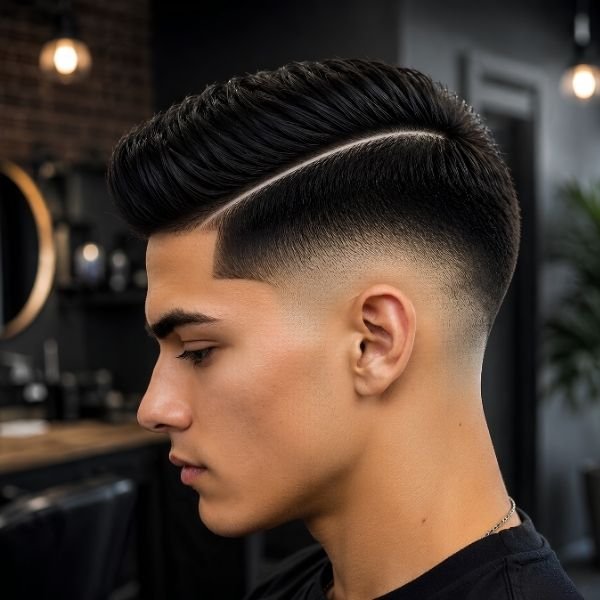
The classic version keeps the fade at a mid height with a straight hard part cut just above the ear. The top hair stays around two to three inches for easy combing.
This style suits men who want a timeless look that works in both office and casual settings. It pairs well with a light matte pomade for a natural finish.
Because it avoids extreme height or heavy texture, this is often the easiest version to request when explaining a burst fade hard part haircut for the first time.
Low Burst Fade Hard Part
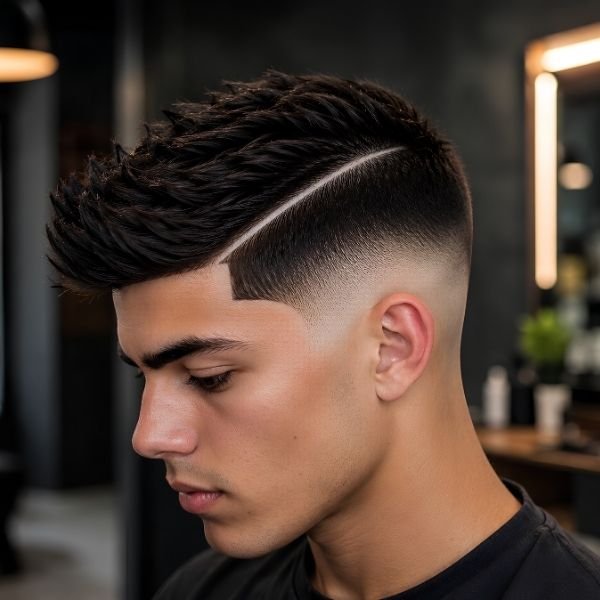
A low burst fade keeps the taper close to the hairline, leaving more length through the sides. This is a subtle option for men who are new to fades.
It offers a softer transition and is easier to grow out without needing frequent trims. The hard part still gives the cut a sharp, intentional finish.
This makes it a practical choice for men who want a low commitment fade while still keeping a clean, styled appearance every day.
Mid Burst Fade Hard Part
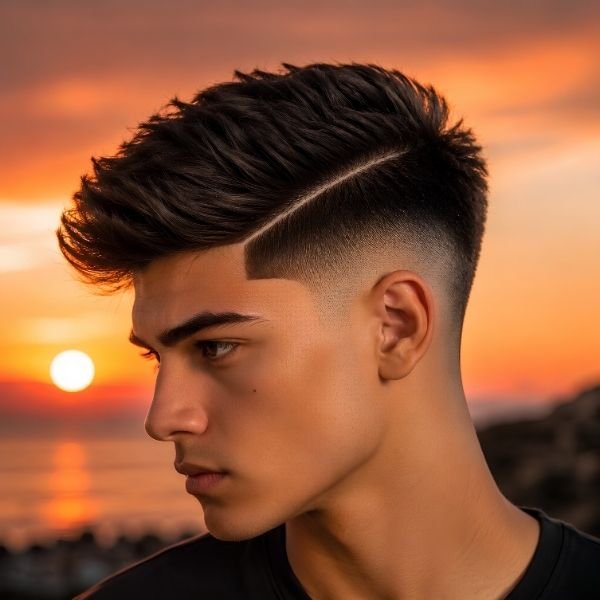
The mid burst fade sits between the temple and the top of the ear, giving a balanced contrast between short and long hair. It is one of the most requested versions at barbershops.
This height flatters most face shapes and works with nearly any top style, from textured crops to slick backs.
Many barbers recommend the mid height as the safest starting point for men trying a burst fade for the first time.
High Burst Fade Hard Part
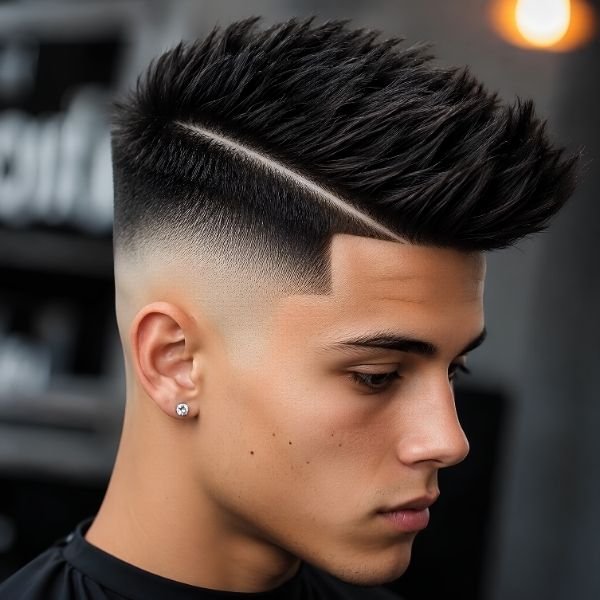
A high burst fade starts higher on the head, creating a bold contrast with the longer top. It suits men who want a striking, high fashion look.
Because the fade sits higher, it requires more frequent touch ups, usually every two to three weeks, to keep the line sharp. It also creates the most noticeable contrast of all three fade heights.
Textured Crop Burst Fade Hard Part
This style pairs a burst fade with a textured crop on top, where the hair is cut short and choppy for a lived-in finish. A matte clay works best to enhance the texture without shine.
It suits wavy and thick hair types that naturally hold movement and volume. Barbers usually cut the top to remove bulk while keeping enough length for texture to show.
Curly Burst Fade Hard Part
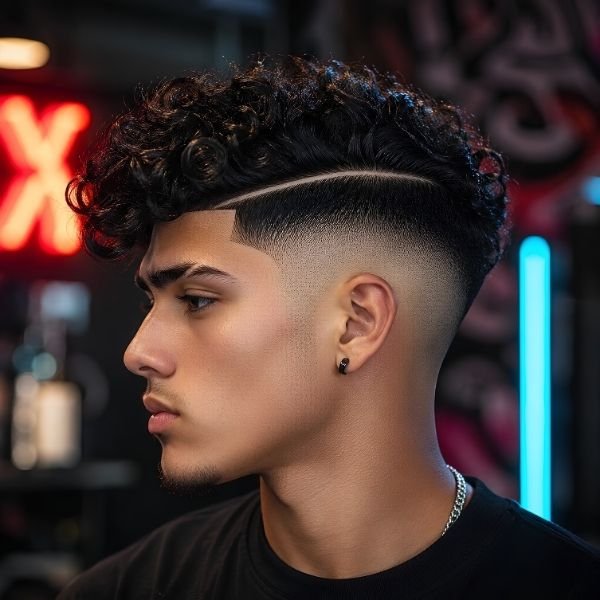
Curly hair pairs beautifully with a burst fade because the fade removes bulk while the curls stay full on top. The hard part adds a clean line that contrasts nicely against natural curl texture.
A lightweight curl cream helps define curls without weighing them down. This version is especially popular among men who want volume on top with a clean, controlled base.
Wavy Burst Fade Hard Part
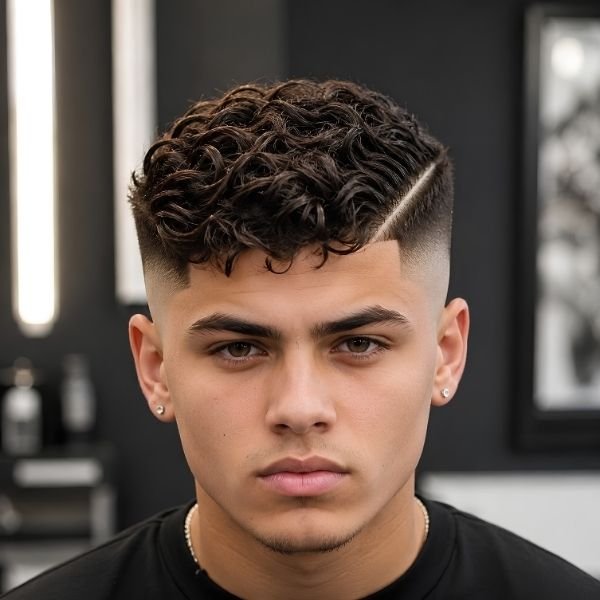
Wavy hair naturally complements the curved shape of a burst fade. The waves flow into the fade line, creating a seamless, textured transition.
This look works well with a sea salt spray for added texture and a beachy, effortless finish. It requires minimal daily styling since the waves largely style themselves.
Slick Back Burst Fade Hard Part
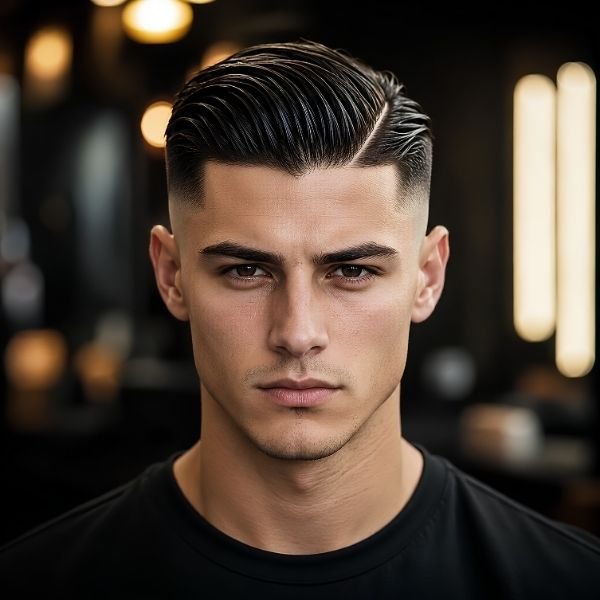
The slick back version uses a pomade or gel to push the top hair straight back, showing off the burst fade and hard part along the sides. It is a favorite for formal events and business settings.
A high shine pomade gives this style its polished, put together look. This is a strong option for weddings, interviews, or any occasion that calls for a more refined appearance.
Comb Over Burst Fade Hard Part
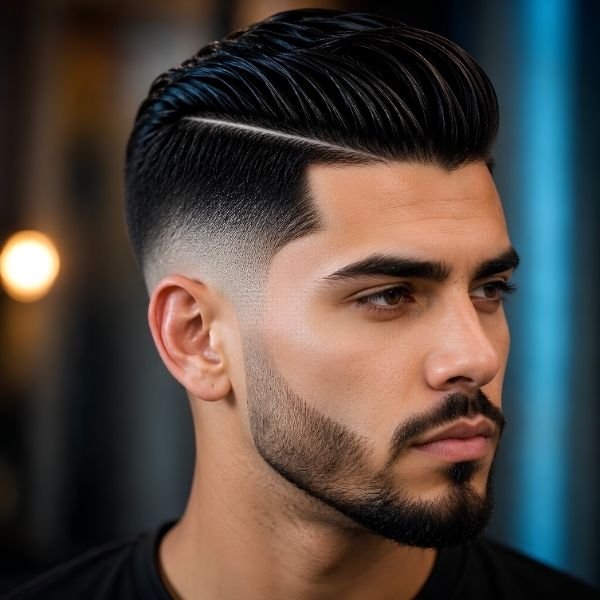
A comb over pairs longer top hair swept to one side with a burst fade beneath it. The hard part becomes the starting line for the comb over, making it easy to style each morning.
This combination is a strong choice for professional environments. It also grows out gracefully, giving you extra time between visits without losing shape.
Pompadour Burst Fade Hard Part
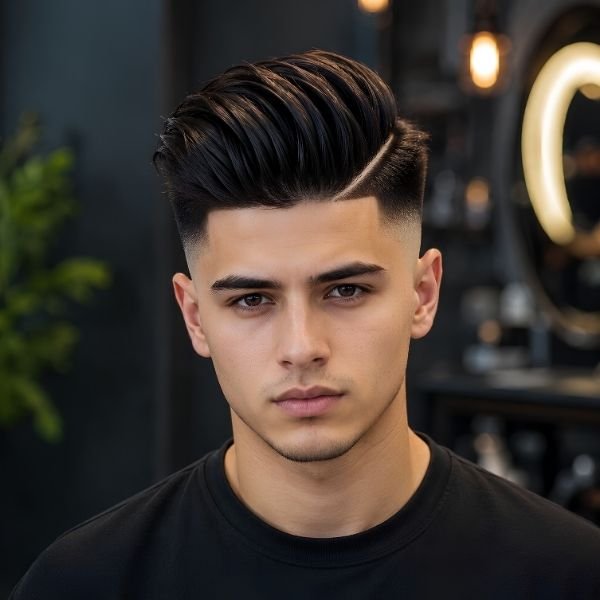
The pompadour adds height and volume at the front while the burst fade keeps the sides clean. This bold, voluminous style needs a strong hold pomade to maintain its shape through the day.
It suits men with thicker hair that can support extra height. A blow dryer and round brush are often used before styling to build the initial lift at the front.
Faux Hawk Burst Fade Hard Part
A faux hawk styles the center section of hair upward while the burst fade tapers the sides. The hard part frames the design and adds extra sharpness to the overall shape.
This is a bold option for men who want a statement look for nights out or events. It works best on thicker hair that holds its shape when styled upward.
Spiky Top Burst Fade Hard Part
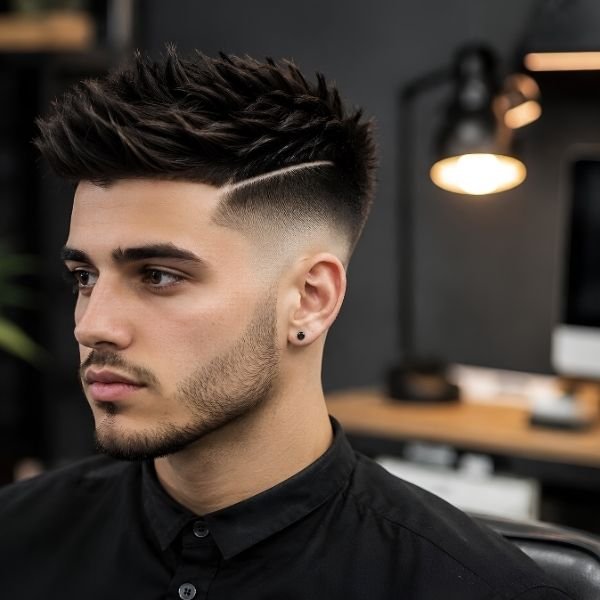
Short spikes on top paired with a burst fade create a youthful, energetic style. A strong hold wax or gel keeps the spikes upright throughout the day.
This look pairs well with straight or thick hair types that can hold spikes easily. Drying the hair upward with a diffuser before applying the product helps the spikes last longer.
Messy Fringe Burst Fade Hard Part
A messy fringe brings a relaxed, undone texture to the front while the burst fade and hard part keep the sides sharp. This contrast between messy and clean makes the style stand out.
A texturizing spray works well to enhance the fringe’s natural movement. This is a favorite among younger men who want a relaxed style without looking unkempt.
Beard Blend Burst Fade Hard Part
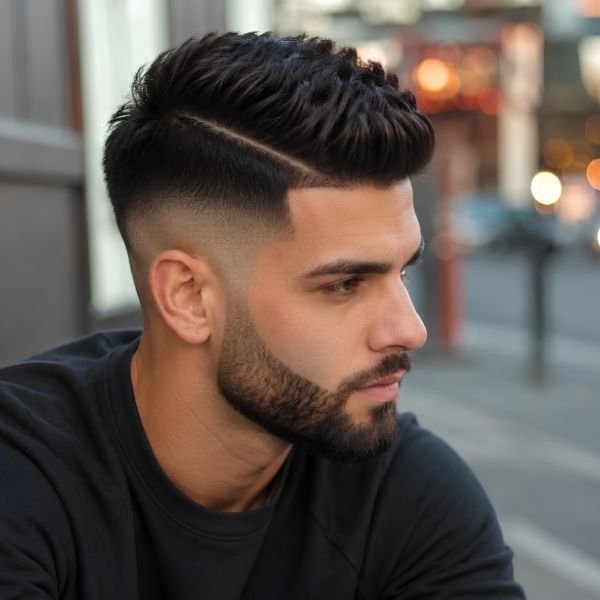
This variation blends the burst fade directly into a full or stubble beard, creating one continuous, seamless line from the sideburn to the jaw. It gives the entire look a cohesive, groomed finish.
Regular beard trims are needed to keep the blend looking sharp. This pairing is especially popular for men who keep a consistent beard length year round.
Razor Design Burst Fade Hard Part
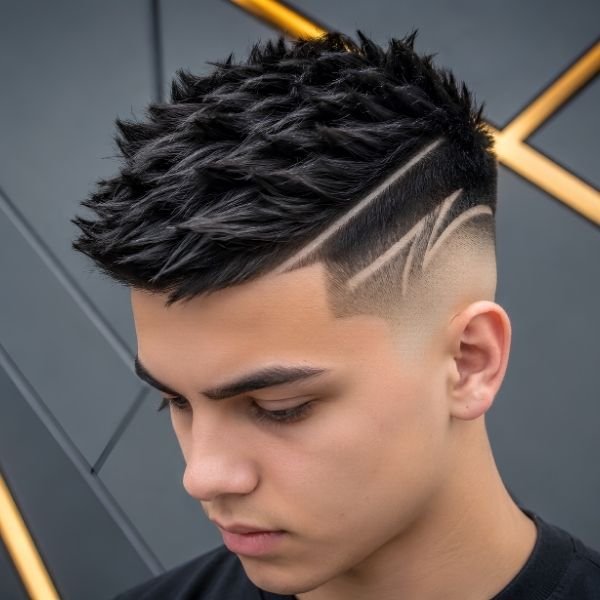
For men who want extra detail, a thin razor design can be added within the burst fade or alongside the hard part. This could be a simple line, a curve, or a small pattern.
Designs require more frequent touch ups since new hair growth quickly blurs fine lines. Keep the design simple if you want it to remain sharp for more than a few days.
Thick Hair Burst Fade Hard Part
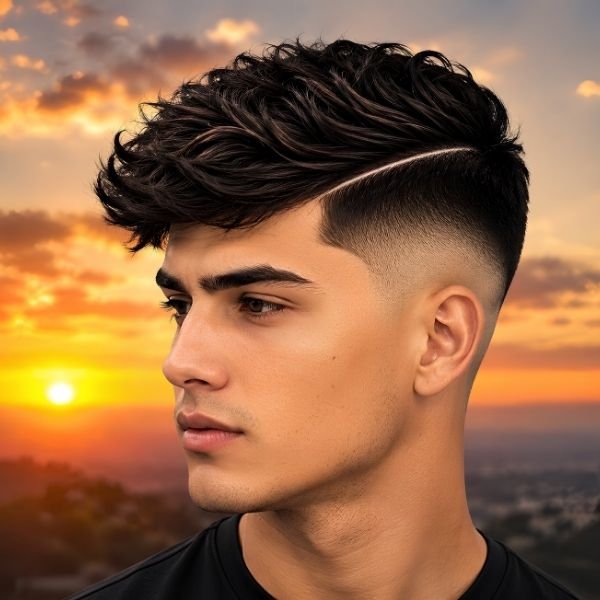
Thick hair holds shape well on top, making it ideal for styles with volume like crops or pompadours. The burst fade removes bulk from the sides to balance out the density on top.
A matte paste helps control thick hair without adding unwanted shine. Thinning shears are often used underneath to reduce weight and improve manageability.
Straight Hair Burst Fade Hard Part
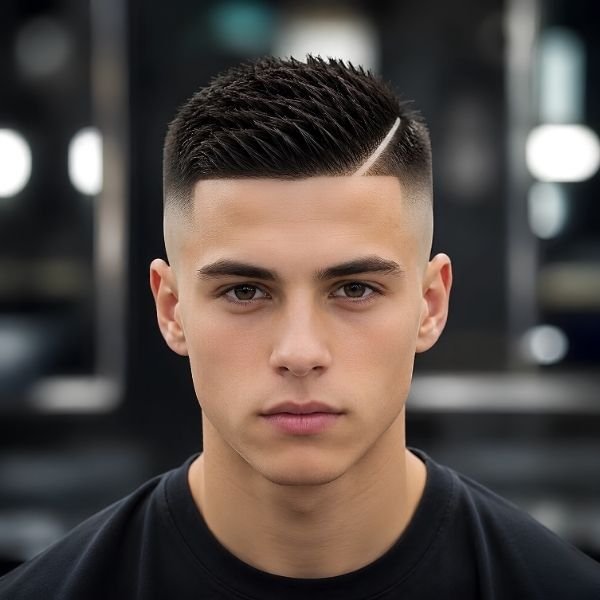
Straight hair creates one of the cleanest hard part lines since it lies flat and does not disrupt the shaved edge. The burst fade adds shape and dimension that straight hair alone can lack.
This combination is low maintenance and easy to style daily. A small amount of light pomade is usually enough to keep the top hair controlled without looking greasy.
Modern Business Burst Fade Hard Part

This professional friendly version keeps the top hair neat and combed, with a low to mid burst fade and a subtle hard part. It looks sharp in an office setting without appearing too edgy.
A light hold pomade keeps the style polished throughout the workday. This is one of the most requested options among men in client facing or corporate roles.
Designer Burst Fade Hard Part
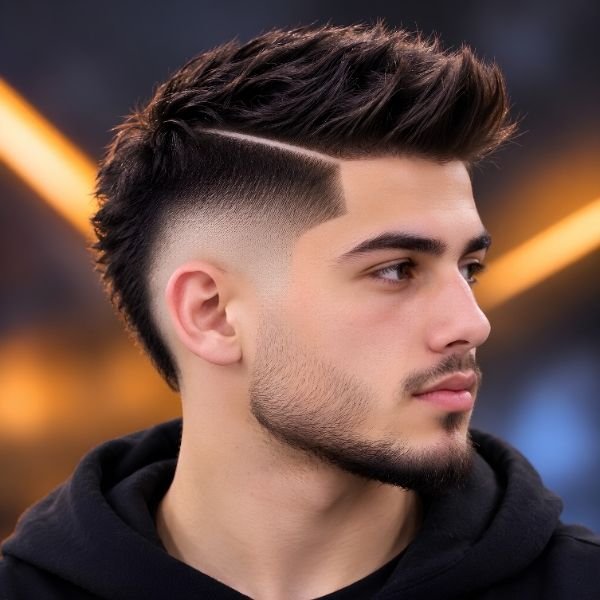
The designer version combines a burst fade, a hard part, and additional custom detailing such as shaved patterns or line work. It is the most personalized option on this list.
This style is best suited for men who want a unique, one of a kind look and are comfortable with more frequent barber visits. Expect to budget extra time and a slightly higher price for this level of detail.
Step-by-Step Tutorial: How to Get the Perfect Burst Fade Hard Part Haircut
Getting a clean burst fade hard part haircut takes precision, the right tools, and a clear plan before the clippers touch the hair. Here is how professional barbers approach the process.
Before any cutting begins, hair should be washed and lightly dried so the barber can see its natural texture and how it falls. This step makes it easier to judge fade height and part placement accurately.
Choose Your Preferred Burst Fade Height
Decide whether you want a low, mid, or high burst fade based on your face shape and how bold you want the contrast to be. Bring reference photos to your barber for the clearest communication.
Consider how often you can visit the barbershop, since higher fades need more frequent maintenance. Your natural hairline and head shape also play a role in which height will look most balanced.
Determine the Hard Part Placement
Mark where the part will sit, usually on the side with the natural hair part or wherever you comb your hair most often. The line typically starts just above the fade and runs toward the front hairline.
A barber will often use a comb to hold hair in place before shaving the line for accuracy. Taking a moment here prevents a crooked or uneven part once the trimmer touches the scalp.
Create the Burst Fade Around the Ear
Using clippers with graduated guards, the barber tapers the hair shortest near the ear and blends it upward in a curved motion. This rounded technique is what separates a burst fade from a standard fade.
Blending is done in small, overlapping passes to avoid visible lines between guard lengths. Patience during this stage is what separates a rough fade from a seamless one.
Cut and Define the Hard Part
Once the fade is blended, the barber uses a trimmer or edger to shave the hard part line cleanly through the hair down to the skin. This step requires a steady hand and sharp blades for crisp edges.
The line is usually kept thin, around one eighth to one quarter inch wide. A thinner line generally looks cleaner and lasts longer before regrowth starts to blur it.
Shape and Style the Top Hair
The top length is trimmed based on the chosen style, whether that is a crop, pompadour, or slick back. Scissors or clippers over comb techniques are used depending on the desired texture.
Common top styling options include:
- Scissor over comb for natural texture
- Clipper over comb for uniform length
- Point cutting for a choppy, textured finish
Blend the Beard (Optional)
If you want a beard blend, the barber connects the fade into the beard using clippers to remove any harsh lines between the sideburn and jaw. This step is optional and only needed for men who keep facial hair.
A seamless blend makes the entire haircut look more cohesive. Skipping this step can leave a visible gap between the fade and the beard line.
Apply Styling Products
The right product depends on the style and hair type. Common choices include:
| Product | Best For | Hold Level |
| Matte clay | Textured crops, messy styles | Medium |
| Pomade | Slick backs, comb overs | High |
| Curl cream | Curly hair | Light |
| Texturizing spray | Fringe, wavy hair | Light |
| Strong hold gel | Spikes, faux hawks | High |
Maintain the Hard Part Regularly
Hard parts grow out faster than the rest of the fade since new hair fills the shaved line within days. Touch ups every one to two weeks keep the part crisp and visible.
Many men learn to refresh the line at home using a small trimmer between barber visits. Going slowly and following the original angle helps avoid widening the part by accident.
Enjoy Your Fresh Burst Fade Hard Part Look
Once the cut is complete, take a photo of the finished style so you can show your barber the same reference at your next visit. Consistency helps maintain the shape over time.
Regular trims every three to four weeks will keep the fade and part looking sharp. Staying on a consistent schedule is the simplest way to keep the whole style looking intentional rather than overgrown.
Conclusion
The burst fade hard part haircut remains one of the most versatile and sharp looking styles for men in 2026. With 19 variations to choose from, there is an option for every hair type, face shape, and lifestyle.
Whether you prefer a low key mid fade or a bold designer cut with custom detailing, the key to nailing this look is clear communication with your barber and consistent maintenance. Bring reference photos, ask about fade height and part placement, and keep up with regular touch ups to enjoy a fresh, clean cut all year round.
Start with a style that matches your current hair length and comfort level, then build up to bolder versions as you get more familiar with the maintenance routine. A good relationship with your barber, along with a bit of patience during the first few visits, will help this haircut look its best for years to come.
FAQs
How long does a burst fade hard part haircut last?
The fade holds its shape for three to four weeks, while the hard part needs a touch up every one to two weeks.
Does the hard part work with all hair types?
Yes, a hard part works on straight, wavy, curly, and coily hair since it is shaved rather than combed into place.
Is a burst fade harder to maintain than a regular fade?
Not significantly, though the curved shape around the ear requires a slightly more skilled barber to blend cleanly.
Can I get a burst fade hard part haircut at home?
It is possible with clippers and an edger, but the curved blending and straight part line are easier to achieve with professional tools and experience.
What face shapes suit a burst fade hard part haircut?
Round, oval, and square face shapes all work well, since the fade height and part placement can be adjusted to balance facial proportions.
How often should I get my hard part touched up?
Most men schedule a touch up every seven to fourteen days to keep the shaved line crisp and visible.
Can this style be combined with a beard?
Yes, many men blend the burst fade directly into a beard for a seamless, well groomed appearance from the sideburn to the jawline.