
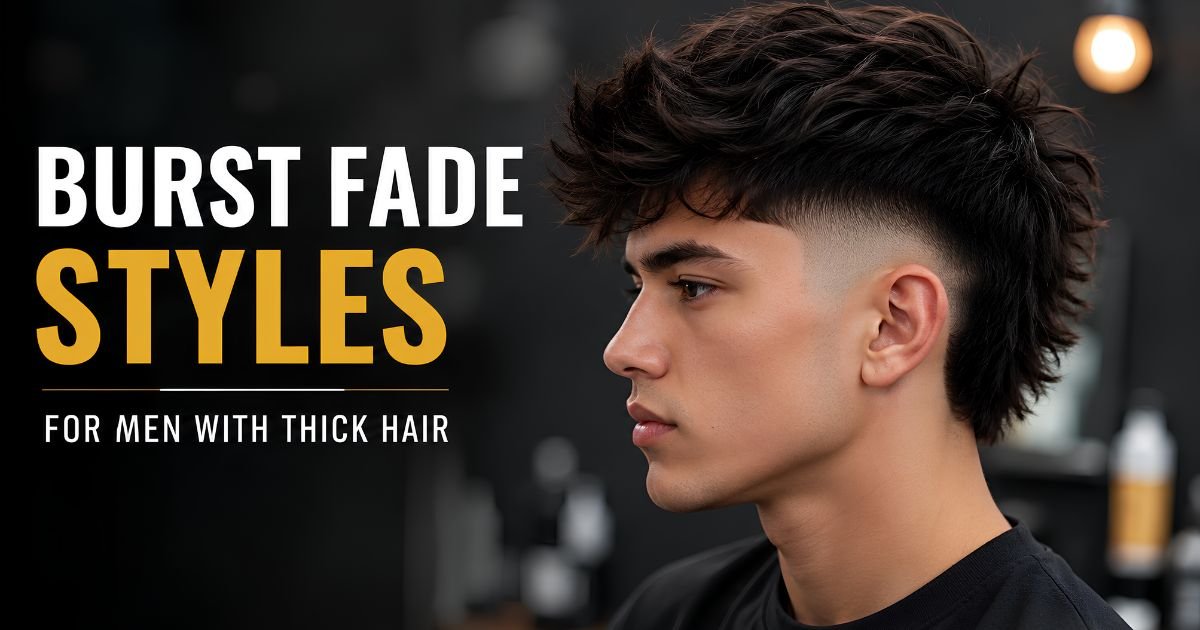
Thick hair holds shape, texture, and volume better than any other hair type. This is exactly why the burst fade has become one of the most requested cuts for men with dense hair in 2026.
Unlike a regular fade, a burst fade curves around the ear instead of cutting straight across the neckline. This rounded shape removes bulk gradually, which matters a lot when your hair is thick and heavy.
This guide covers 25 burst fade styles built specifically for thick hair, along with face shape matching, hair type guidance, maintenance advice, and exact scripts to use with your barber. Every section below is based on real barbering practices, not generic style trends.
Quick Answer
The best burst fade haircuts for thick hair in 2026 include the classic burst fade, curly burst fade, burst fade mohawk, and burst fade pompadour. These styles remove bulk near the ears while keeping enough length on top to show off natural texture.
Most thick haired clients get the best results from a mid or low burst fade. This height blends gradually without exposing too much scalp, which keeps the transition smooth as hair grows out.
If you have curly or coily thick hair, styles like the curly burst fade or afro burst fade work better than sleek options like the comb over, since they let your natural texture do the styling for you.
What Is a Burst Fade for Thick Hair?
A burst fade is a fade that curves around the ear in a semi circle rather than cutting straight across the neckline. On thick hair, this rounded blend removes excess bulk near the temples and ear area while leaving the crown full.
The curved line creates a softer, more sculpted transition than a standard fade. Standard fades cut straight down the side of the head, which can look harsh against thick hair that already carries a lot of visual weight.
A burst fade solves this by tapering hair gradually in a circular pattern around the ear. This spreads the transition over a wider area, so the change from long to short feels smooth instead of abrupt.
Barbers often recommend burst fades for thick hair specifically because the technique gives them more control over where weight is removed. This makes it easier to keep the crown full while thinning out the sides and back.
Why Burst Fades Work So Well on Thick Hair
Thick hair has more strands per square inch than fine or medium hair, which means more weight and more bulk overall. A burst fade addresses this directly by removing hair strategically instead of all at once.
- Removes weight around the ears without flattening the crown
- Creates a rounded silhouette that suits dense, heavy hair
- Highlights natural texture such as waves, curls, and coils
- Reduces bulk so hair styles more predictably each day
- Works with almost any top length, from buzzed to long
- Keeps a defined shape even as hair grows out between trims
- Gives barbers more control over blending than a straight fade
Thick hair also tends to grow outward rather than lying flat, which is why a fade with more shaping around the ear looks cleaner than a basic taper. The rounded burst line hides the natural outward growth pattern better than a straight line does.
Another reason barbers favor this technique on dense hair is control during the blending stage. A straight fade line has less room for error, since any unevenness is immediately visible along a flat edge. The curved burst line gives more surface area to blend gradually, which forgives small inconsistencies in hair growth or density around the ear.
25 Burst Fade Haircuts That Look Amazing on Thick Hair (2026)
Each of these 20 styles has been chosen because it works with the natural density and texture of thick hair rather than fighting against it. Some suit straight hair, others are built for curls, and a few work best paired with facial hair.
Classic Burst Fade with Thick Top
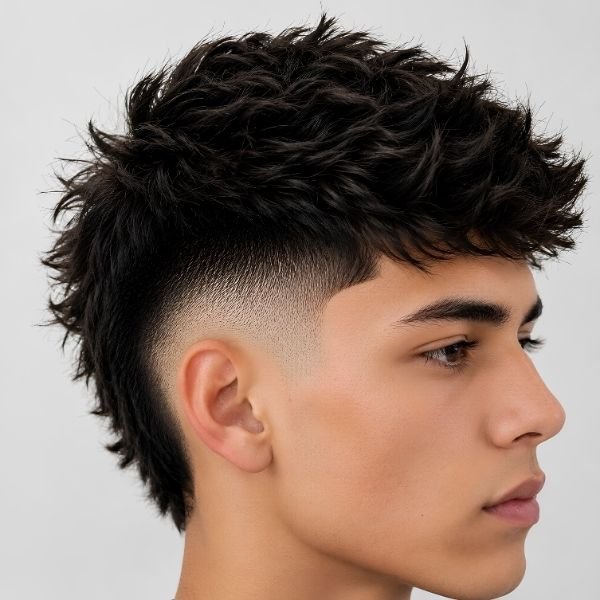
This is the standard burst fade paired with two to three inches of length on top. It suits nearly every thick hair texture, whether straight, wavy, or slightly curly.
The classic version gives barbers room to add texture without losing volume. It is a safe starting point if you are trying a burst fade for the first time.
This style works for almost any face shape, which is one reason it remains the most requested burst fade option. It also transitions well into other styles as your hair grows out.
High Burst Fade for Thick Hair
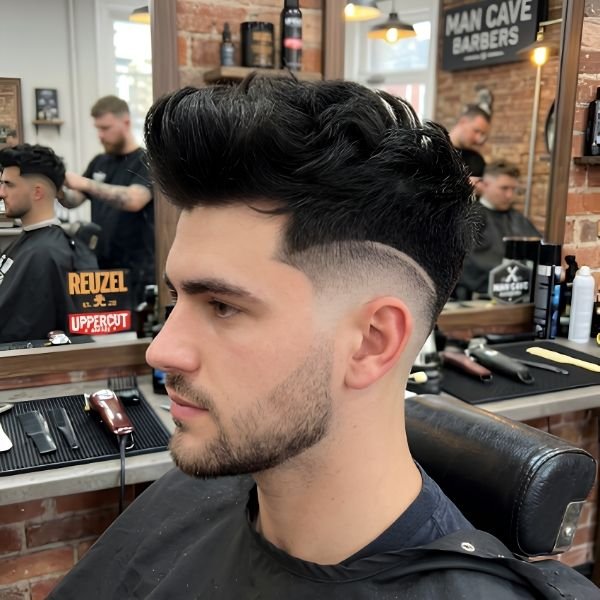
A high burst fade starts closer to the crown, removing more bulk overall than a mid or low version. It suits men with very dense hair who want a sharper, more dramatic contrast between the sides and top.
Because more hair is removed, this style shows off the burst shape more clearly. It also tends to make round faces appear longer, since the added height draws the eye upward.
The tradeoff is maintenance. A high burst fade grows out faster than lower versions, so expect to visit your barber every two weeks to keep the line sharp.
Low Burst Fade for Thick Hair
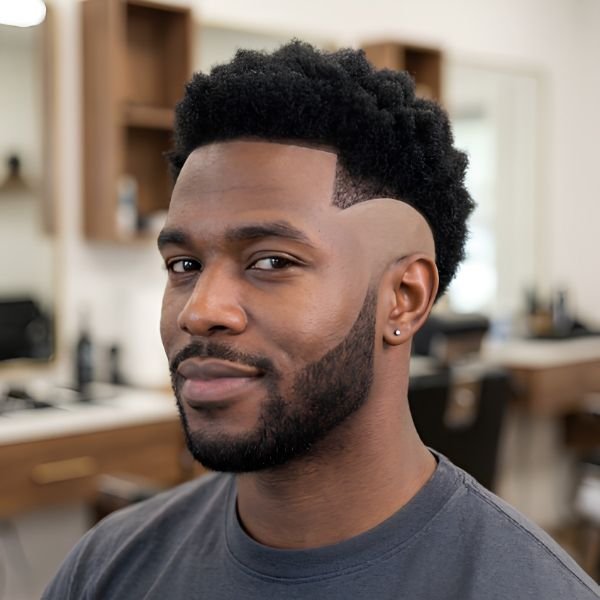
The low burst fade starts just above the ear, leaving more hair on the sides. It is the safest choice for thick hair since it blends gradually and requires fewer touch ups.
This style suits clients who want a subtle change rather than a dramatic one. It also works well for thicker, coarser hair types that hold shape without needing a sharp contrast to look defined.
Because less hair is removed near the ear, the low burst fade is a good option for first time fade clients or anyone returning to short hair after growing it out.
Mid Burst Fade for Thick Hair
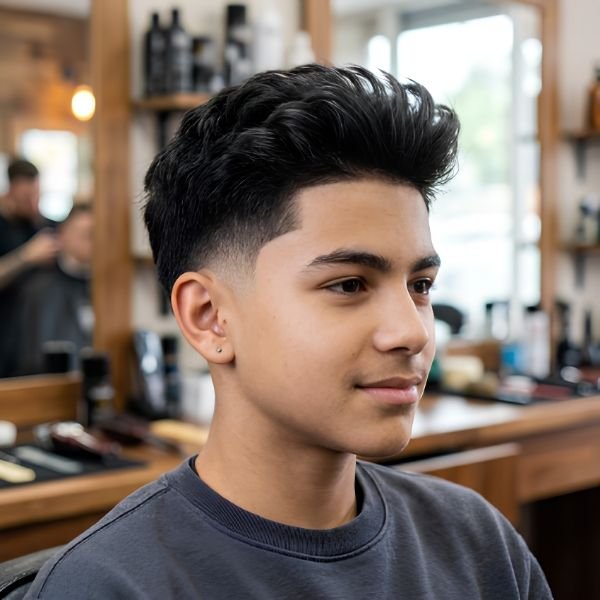
Sitting between the high and low versions, the mid burst fade balances contrast and coverage. It is one of the most requested options because it suits almost every face shape and hair density.
This height works particularly well for thick hair because it removes enough bulk to reduce weight, without exposing so much scalp that the cut looks severe. It also grows out more evenly than a high burst fade.
Barbers often recommend starting here if you are unsure which height suits you, since it is easier to adjust higher or lower on your next visit.
Curly Burst Fade for Thick Hair
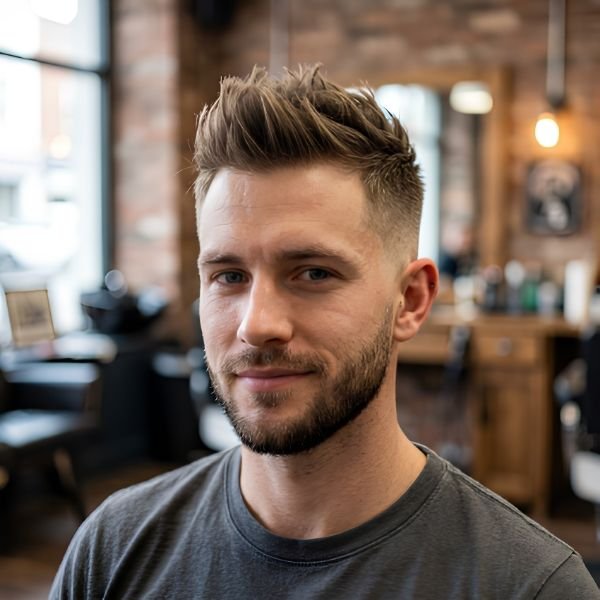
This style leaves natural curls untouched on top while fading the sides in a rounded shape. It reduces the weight of thick curly hair so curls define better instead of clumping into a heavy mass.
Curly hair often looks bulkier than it actually is because curls trap volume close to the scalp. A burst fade removes side and back bulk, which lets the curls on top fall and bounce more naturally.
This style pairs well with curl creams or gels applied to damp hair, since product helps define individual curls once the sides are cleaned up.
Textured Burst Fade for Thick Hair
A textured burst fade uses point cutting or texturizing shears on top to break up bulk. This works well for thick straight or wavy hair that otherwise looks like a solid, heavy block.
Texturizing removes weight without shortening the overall length significantly. This gives movement and separation to hair that would otherwise sit flat or look overly uniform.
This style also styles faster than a non textured cut, since broken up ends respond better to light products like sea salt spray or matte paste.
Burst Fade Mohawk for Thick Hair
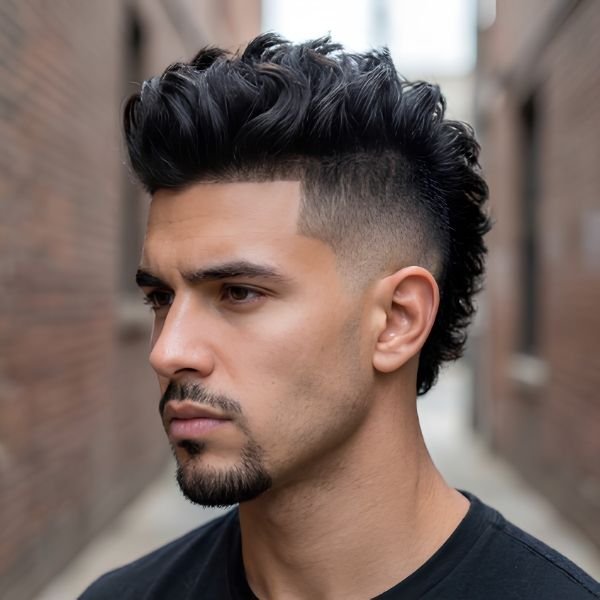
The burst fade mohawk keeps a strip of length down the center while fading both sides in a rounded shape. Thick hair holds the mohawk shape upright without heavy product, which is a major advantage over fine hair types.
This is a bold style suited to clients who want a strong statement look. It works best with straight to wavy thick hair, since curly hair can make the center strip look wider than intended.
Styling usually only requires a small amount of matte clay or pomade, since thick hair already has natural lift and body.
Burst Fade with Beard for Thick Hair
Pairing a burst fade with a full beard creates a connected, symmetrical look. The rounded fade line blends smoothly into beard hair near the sideburns, which suits thick facial hair just as well as thick head hair.
This combination works especially well for square and diamond face shapes, since the beard softens strong jaw angles while the fade keeps the sides clean.
Ask your barber to blend the fade directly into the beard line rather than leaving a hard stop at the sideburns. This creates a seamless transition between the two.
Burst Fade Pompadour for Thick Hair
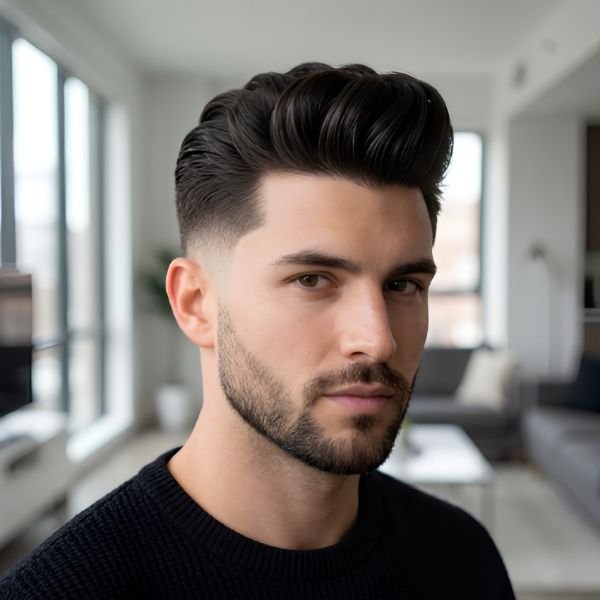
A pompadour needs volume, which thick hair provides naturally. The burst fade removes bulk at the sides so the swept up top has room to stand without looking overloaded or heavy.
This style suits straight to wavy thick hair best, since curly hair can make the pompadour shape harder to control. A blow dryer and round brush are usually needed to set the shape before applying product.
The burst fade underneath keeps the overall silhouette balanced, preventing the pompadour from looking too top heavy against thick sides.
Burst Fade Caesar Cut for Thick Hair
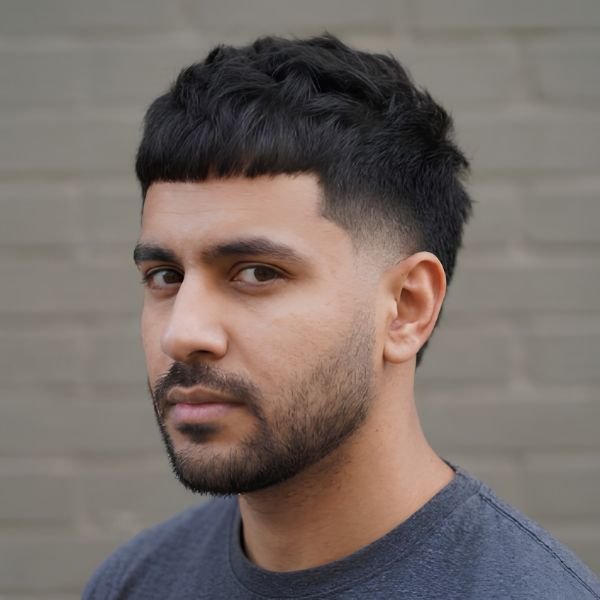
The Caesar cut features short, forward pushed fringe with a burst fade underneath. It is a low maintenance option that still looks sharp on dense, straight, or wavy hair.
This style requires very little daily styling, since the fringe is cut short enough to fall naturally forward. It suits clients who want a clean, professional look without spending time on product each morning.
The Caesar cut also works well for hairlines that are just beginning to recede, since the forward fringe helps disguise early thinning at the front.
Burst Fade French Crop for Thick Hair
The French crop combines a textured fringe with a burst fade on the sides. Thick hair gives the fringe more presence and body compared to fine hair types, making the crop look fuller.
This style suits most face shapes and works well for both straight and wavy thick hair. The fringe is usually textured with scissors to add movement rather than left as a blunt line.
A small amount of matte paste applied to the fringe gives it separation and a slightly disheveled, modern look.
Burst Fade Hard Part for Thick Hair
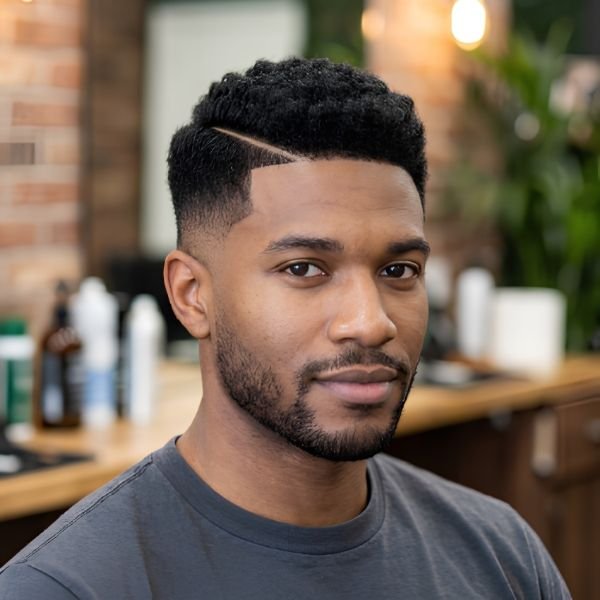
A hard part adds a shaved line dividing the fade from the top section. This works especially well on thick hair since the crisp line contrasts sharply against the dense length above it.
The hard part is a detail rather than a full style change, so it can be added to almost any burst fade variation on this list. It gives the cut a more precise, finished appearance.
This detail does require upkeep, since the shaved line grows out within one to two weeks and needs a quick touch up to stay sharp.
Burst Fade Side Part for Thick Hair
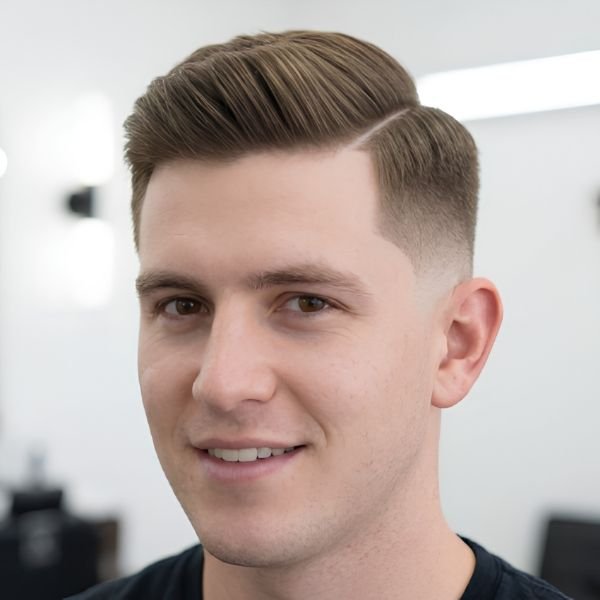
The side part burst fade is a classic, professional style with hair swept to one side. Thick hair holds the part shape all day without needing constant restyling, which makes it popular for office settings.
This style suits oval, square, and heart shaped faces particularly well. A comb and a small amount of pomade are usually enough to set the part in the morning.
Because thick hair has natural body, the side part often looks fuller and more defined than the same style on fine hair.
Burst Fade Crew Cut for Thick Hair
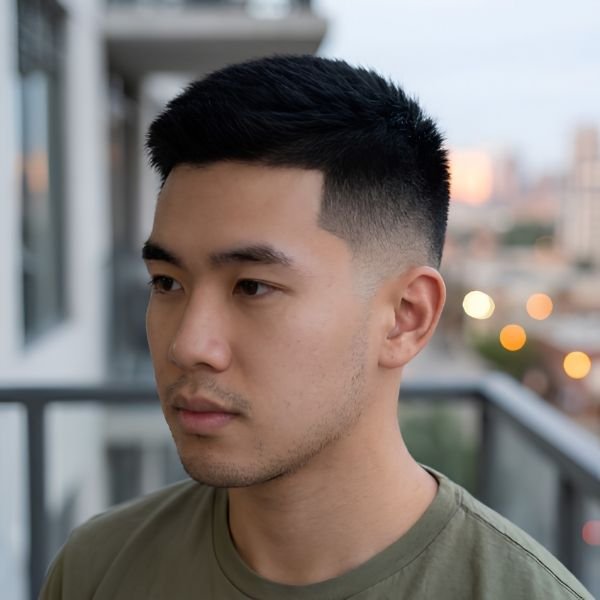
The crew cut keeps the top short and uniform while the burst fade tapers the sides. It is one of the lowest maintenance options for thick hair since there is minimal length to style.
This cut suits clients who want a clean, no fuss look for work, sports, or daily convenience. It also grows out evenly, since the short top length hides regrowth better than longer styles.
Thick hair actually looks fuller in a crew cut than fine hair does, since the density fills out the short length without appearing thin.
Burst Fade Undercut for Thick Hair
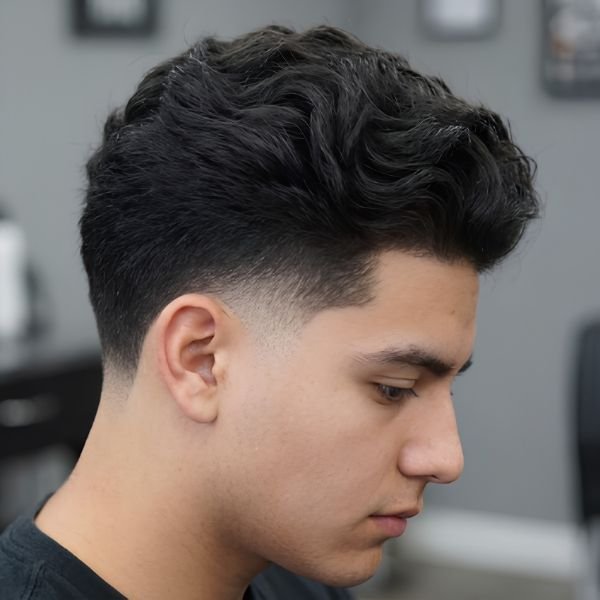
An undercut burst fade combines a disconnected shaved section with longer length on top. Thick hair creates strong contrast here, making the disconnected look more pronounced than it would on finer hair.
This style suits clients who want a dramatic change between the top and sides. It works well with slicked back, textured, or curly top styles.
Because the sides are shaved much shorter than a standard fade, this style needs slightly more frequent trims to avoid an overgrown, patchy look near the part line.
Burst Fade Quiff for Thick Hair
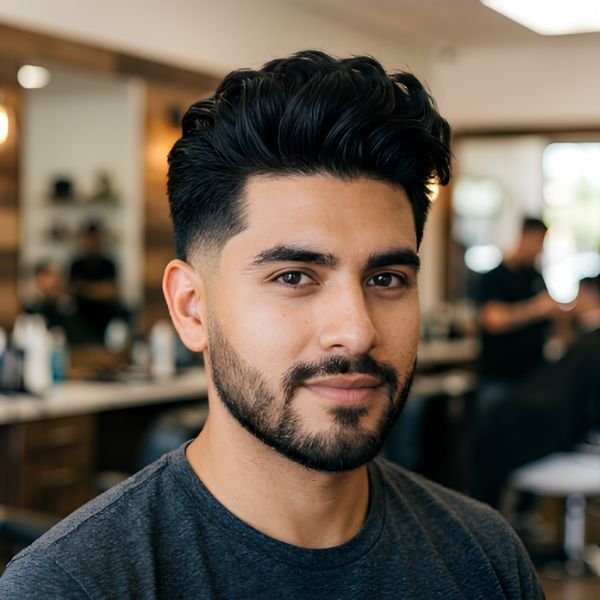
The quiff lifts hair upward and back at the front. Thick hair naturally supports the lift needed for this style, so it requires less product than fine hair versions need to hold the same shape.
This style works well for straight and wavy thick hair, giving a modern, slightly retro look. Round and oval face shapes both suit the added height at the front.
A light hold paste is usually enough, since thick hair already provides the volume that finer hair types need heavier product to fake.
Spiky Burst Fade for Thick Hair
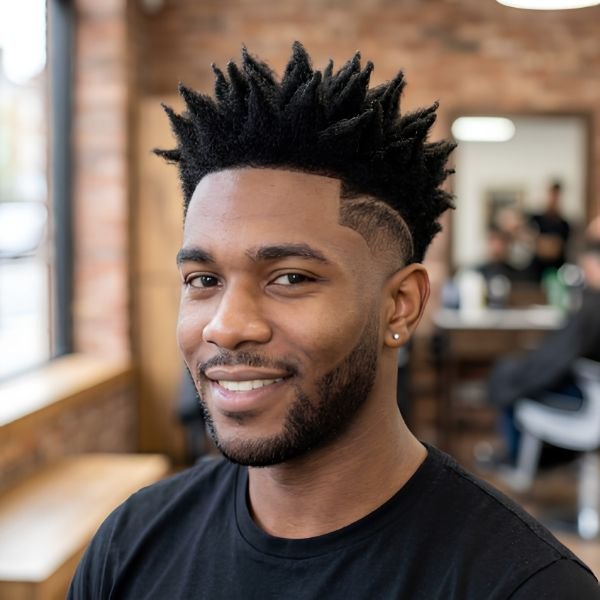
This style uses shorter top length styled into defined spikes. Thick hair holds spikes firmly in place, making this a durable choice for active lifestyles or humid climates.
The spiky look works best on straight to slightly wavy thick hair, since very curly hair makes individual spikes harder to define. A strong hold wax or gel is typically used to set the shape.
This cut pairs well with a mid or low burst fade, since a high fade can make the spikes look disconnected from the sides.
Burst Fade with Curly Fringe for Thick Hair

Leaving the fringe longer and curly while fading the sides creates a bold, textured contrast. It works best on thick curly or coily hair types that naturally hold ringlet or wave patterns at the front.
This style draws attention to the fringe as the focal point of the haircut. The sides stay clean and low maintenance, while the top requires curl specific products to define shape.
A lightweight curl cream applied to damp hair helps the fringe curl consistently without becoming stiff or crunchy.
Afro Burst Fade for Thick Hair
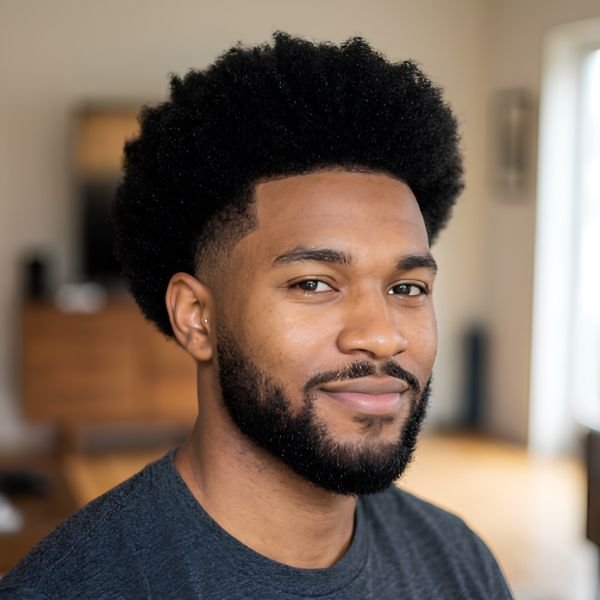
This pairs a rounded afro shape on top with a burst fade at the sides. It suits thick coily and tightly curled hair, keeping volume on top while cleaning up the perimeter around the ears and neck.
This style is popular because it preserves natural hair texture almost entirely, unlike styles that require straightening or heavy product. The burst fade simply shapes and defines the edges of the afro.
Regular trims help maintain the rounded afro shape, since thick coily hair can grow unevenly if left unattended for too long.
Burst Fade Comb Over for Thick Hair
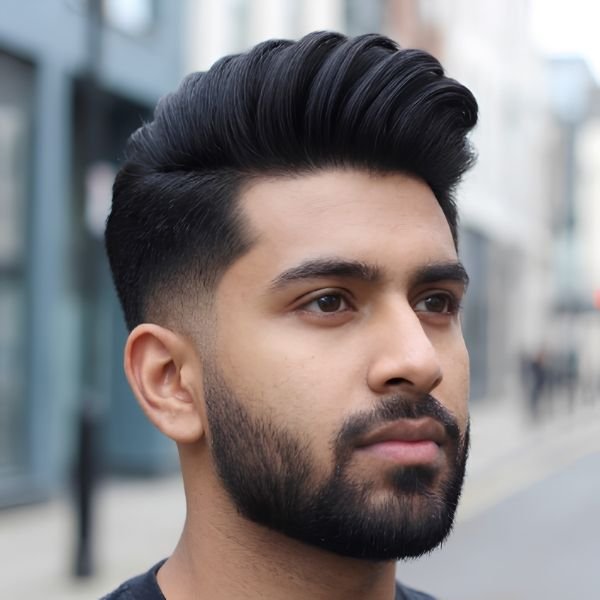
The comb over burst fade combines swept over length with a rounded fade beneath. Thick hair holds the combed direction well, giving the style a polished, structured finish that lasts through the day.
This style suits professional settings and works especially well for oval and square face shapes. A blow dryer is often used to set the direction before applying a light hold product.
Because thick hair has natural volume, the comb over rarely needs heavy pomade to stay in place, unlike the same style on fine hair.
Who Should Get a Burst Fade for Thick Hair?
Burst fades were essentially designed with thick hair in mind, since the rounded shape handles bulk better than a straight fade line.
- Men with dense, coarse, or heavy hair looking to reduce bulk
- Anyone who wants a rounded, sculpted fade shape instead of a straight line
- Curly, wavy, and coily hair types wanting definition without excess weight
- Clients who want a style that grows out cleanly between trims
- Anyone pairing a fade with a beard, since the rounded line blends more naturally
- Clients who change hairstyles often, since a burst fade adapts to many top lengths
Who Should Avoid a Burst Fade for Thick Hair?
A burst fade is not the right choice for every client, even those with thick hair. Certain hair conditions and lifestyle preferences make other cuts a better fit.
- Men who want a completely low maintenance cut with no regular touch ups
- Those with a receding hairline who need more coverage near the temples
- Anyone uncomfortable with visible scalp during the early growth stage
- Clients who prefer a straight, traditional fade line over a rounded shape
- Anyone with a very sensitive scalp, since clippers work closer to the skin near the ear
- Clients growing hair out for a longer style, since fades require frequent maintenance
Face Shape Guide for a Burst Fade for Thick Hair
Face shape plays a major role in how a burst fade looks once styled. The table below matches common face shapes with the burst fade styles that complement them best.
| Face Shape | Recommended Style | Why It Works |
| Round | High burst fade | Adds height and elongates the face |
| Oval | Classic burst fade | Suits almost any length or shape |
| Square | Burst fade with beard | Softens strong jawlines |
| Long | Low burst fade with fringe | Adds width and shortens visual length |
| Heart | Burst fade Caesar cut | Balances a wider forehead |
| Diamond | Textured burst fade | Softens sharp cheekbones |
If you are unsure of your face shape, look at a straight on photo and compare the width of your forehead, cheekbones, and jawline. This quick comparison usually points you toward one of the six shapes above.
Thick hair gives you slightly more flexibility with face shape rules than fine hair does, since added volume on top can visually adjust proportions on its own. A round face paired with a high burst fade and extra height on top, for example, often looks more elongated than the fade height alone would suggest.
Hair Type Guide for a Burst Fade for Thick Hair
Thick hair itself comes in several different textures, and each one responds differently to a burst fade. Matching the style to your specific texture avoids disappointing results.
| Hair Type | Best Burst Fade Style | Note |
| Straight thick | Comb over or side part | Holds direction without frizz |
| Wavy thick | Textured burst fade | Shows natural movement |
| Curly thick | Curly burst fade | Reduces weight, keeps curl pattern |
| Coily or afro | Afro burst fade | Preserves volume on top |
| Fine but dense | Low burst fade | Prevents over thinning |
| Coarse thick | High burst fade | Removes maximum bulk |
Fine but dense hair, meaning individual strands are thin but there are a very high number of them, needs a slightly different approach than coarse thick hair. A low burst fade avoids removing so much hair that the style starts to look thin at the sides.
Coarse thick hair, on the other hand, can handle more aggressive thinning since each strand carries more visual weight on its own. Barbers often use a combination of clippers and texturizing shears on coarse thick hair to avoid a blocky, unnatural finish on top.
Burst Fade for Thick Hair Comparisons
Understanding how burst fade heights and variations differ helps you communicate more clearly with your barber and set realistic expectations for maintenance.
Burst Fade for Thick Hair vs. High Burst Fade
A standard burst fade on thick hair usually sits at a mid height by default. A high burst fade removes more length near the crown, creating a bolder contrast but requiring more frequent trims to maintain the line.
The high version suits clients who want maximum bulk removal and do not mind visiting the barber every two weeks. It also tends to draw more attention to the fade itself rather than the top style.
Burst Fade for Thick Hair vs. Mid Burst Fade
The mid burst fade is often the default recommendation for thick hair because it balances contrast and coverage. It suits more face shapes and grows out more gracefully than a high version.
Choosing between a general burst fade and a mid burst fade often comes down to personal preference on how much scalp shows. Most barbers will describe a standard burst fade request as a mid height unless told otherwise.
Burst Fade for Thick Hair vs. Low Burst Fade
A low burst fade keeps more length on the sides, making it the easiest option to maintain. It suits clients who want a subtle fade rather than a dramatic contrast between the top and sides.
This version is a strong choice for workplaces with conservative grooming expectations, since it reads as a classic haircut rather than an obviously trendy fade.
Burst Fade for Thick Hair vs. Burst Fade Mullet
A burst fade mullet keeps extra length at the back while fading the sides in a rounded shape. It suits thick hair well since the added weight at the back holds shape better than fine hair would.
This variation is bolder and more trend driven than the other comparisons on this list. It works best for clients who already have some length at the back and want to keep it while cleaning up the sides.
How to Ask Your Barber for a Burst Fade for Thick Hair
Clear communication is the single biggest factor in getting a burst fade that actually suits your hair. Follow these steps in order during your appointment.
Step 1: Show Reference Photos
Bring two or three clear photos from different angles, including a front view and a side view. This helps your barber understand the exact fade height and top length you want without relying on verbal description alone.
Step 2: Explain Your Hair Type
Mention that your hair is thick and describe its texture, whether straight, wavy, curly, or coily. This single detail changes how a barber approaches cutting, since thick hair often needs thinning shears that fine hair does not.
Step 3: Choose Your Fade Height
Decide between high, mid, or low before sitting in the chair. Stating your preferred height clearly avoids confusion once the clippers start, since these three heights look very different once finished.
Step 4: Describe the Top Style
Be specific about length and shape on top, such as textured, pompadour, or quiff. Vague requests like just take some off the top often lead to results that do not match what you pictured.
Step 5: Ask for Weight Removal
Request thinning shears or point cutting if your hair feels too heavy. This is especially useful for thick, dense hair types, since it reduces bulk without shortening the visible length of the style.
Step 6: Discuss the Neckline and Sideburns
Confirm whether you want a rounded or squared neckline and how the sideburns should connect to the fade. This detail is often overlooked but makes a noticeable difference in how finished the cut looks.
Step 7: Ask About Styling Products
Ask your barber which products suit your hair type and the style you chose. Barbers see the results of different products on thick hair daily, so their recommendation is usually more reliable than generic online advice.
Step 8: Plan Your Next Trim
Ask how many weeks until the fade needs a refresh. Thick hair fades typically need attention every two to three weeks, and knowing this in advance helps you plan future appointments.
Barber Request Examplea
Here is a full example script you can use or adapt at your next appointment.
“I have thick, wavy hair and want a mid burst fade with a textured top around three inches long. Please remove some weight with thinning shears, keep the neckline rounded, and let me know what products would work best for daily styling.”
Pro Tip
Always mention your hair type before describing the style. Barbers adjust their cutting technique differently for thick hair compared to fine hair, and leading with this detail sets the whole appointment up for a better result.
How to Maintain a Burst Fade for Thick Hair
Thick hair grows faster in appearance because the fade line becomes visible sooner than it would on finer hair. Regular upkeep keeps the shape sharp and prevents the style from looking overgrown or shapeless.
Most maintenance issues with thick hair burst fades come from waiting too long between visits rather than anything going wrong with the initial cut. Building a consistent routine from day one makes the style far easier to manage over time.
Maintenance Tips
- Schedule a trim every two to three weeks to maintain the fade line
- Wash with a clarifying shampoo weekly to prevent product buildup
- Use a leave in conditioner if hair feels dry or coarse
- Trim the top slightly between full haircuts to manage bulk
- Avoid heavy oils that weigh down textured or curly styles
- Ask your barber to line up the neckline between full appointments if it grows out first
- Keep a small trimmer at home for quick sideburn touch ups between visits
Styling Tips and Techniques for a Burst Fade for Thick Hair
Thick hair responds well to lightweight products since it already has natural volume and hold. The goal with styling should always be definition, not added bulk.
Styling Tips
- Apply product to damp hair for even distribution and better control
- Use a diffuser on curly or wavy thick hair to enhance natural texture
- Blow dry straight thick hair in the direction of the desired style
- Avoid overloading with wax or pomade, which can make thick hair look greasy
- Comb through curls gently instead of brushing to preserve definition
- Let hair air dry partially before applying product for a more natural finish
- Reapply a small amount of product midday if humidity causes frizz
Recommended Products for a Burst Fade for Thick Hair
Choosing the right product depends heavily on your hair texture and the specific burst fade style you have chosen. The table below breaks down the most useful product categories.
| Product Type | Purpose | Best For |
| Matte clay | Strong hold with no shine | Textured or spiky styles |
| Sea salt spray | Adds texture and grip | Wavy or straight thick hair |
| Curl cream | Defines curls without weight | Curly and coily hair |
| Pomade | Sleek, controlled finish | Side parts and comb overs |
| Clarifying shampoo | Removes buildup | All thick hair types |
| Leave in conditioner | Adds moisture | Dry or coarse hair |
Best Products
Beyond the categories above, a few product habits make a noticeable difference for thick hair specifically.
- Choose water based products over oil based ones to avoid buildup
- Use a small amount first, since thick hair needs less product than expected
- Store curl creams and pomades away from heat to preserve their texture
- Replace styling products every six months, since old formulas lose effectiveness
Pros and Cons of a Burst Fade for Thick Hair
Every haircut comes with tradeoffs, and the burst fade is no exception. Reviewing both sides helps you decide if this is the right cut before booking an appointment.
| Pros | Cons |
| Reduces bulk without flattening top volume | Needs trims every two to three weeks |
| Suits most face shapes and hair textures | Growing out can blur the fade line quickly |
| Works with beards for a connected look | Requires a skilled barber for clean blending |
| Highlights natural curl or wave pattern | Not ideal for covering a receding hairline |
| Adapts to many different top lengths | Can feel repetitive if barber lacks burst fade experience |
Common Mistakes to Avoid
Getting a burst fade wrong on thick hair usually comes down to poor communication or skipping maintenance rather than the style itself being a bad fit.
Common Mistakes
- Skipping trims and letting the fade grow out unevenly
- Not mentioning hair thickness to the barber beforehand
- Using heavy products that weigh down textured or curly hair
- Choosing a high fade without discussing how fast it grows out
- Overwashing hair, which strips natural oils and increases frizz
- Applying product to fully dry hair, which reduces even distribution
- Ignoring neckline growth, which makes the whole cut look unkempt sooner
Conclusion
A burst fade is one of the most flexible cuts available for thick hair, since it removes bulk while preserving the texture and volume that thick hair naturally offers. From the classic burst fade to bolder options like the mohawk or afro burst fade, there is a version suited to nearly every face shape and hair texture on this list.
The key to success is choosing the right fade height for your hair density, communicating clearly with your barber, and staying consistent with trims every two to three weeks. Get these three things right and a burst fade will stay sharp, easy to style, and well suited to thick hair well into 2026 and beyond.
If you are booking your first appointment, start with a mid burst fade and a classic top length. This gives you a reliable baseline to compare against as you experiment with bolder variations like a mohawk, quiff, or hard part on future visits.
FAQs
Is a burst fade good for thick hair?
Yes, it removes bulk near the ears while keeping volume on top for texture and shape.
How often should thick hair get a burst fade trimmed?
Every two to three weeks keeps the fade line sharp and clean.
Does a burst fade work with curly thick hair?
Yes, it reduces weight so curls define better instead of clumping together.
What is the best burst fade height for thick hair?
A mid burst fade suits most face shapes and hair densities best.
Can I get a burst fade with a beard?
Yes, the rounded fade blends smoothly into beard hair near the sideburns.
Does a burst fade suit round faces?
A high burst fade adds height and helps elongate a round face shape.
What products work best for thick hair after a burst fade?
Matte clay, sea salt spray, and curl cream work well without adding excess weight.